
How to use a slow cooker is a must-learn for any busy home cook who wants flavorful, safe, and hands-off meals with minimal stress. If you’re new to slow cookers or only use one occasionally, this guide delivers step-by-step solutions—not just generic tips—to make every meal reliably delicious.
Key Takeaways
- Always fill your slow cooker halfway to three-quarters for best results—underfilling and overfilling cause cooking problems.
- Sear meat first, layer roots below, and add dairy and herbs only in the last 30 minutes to prevent curdling and boost flavor.
- Never cook frozen meats directly, and keep the lid on—each peek can add up to 30 minutes to cooking time.
- Slow cooker basics — how to use a slow cooker for the first time
- The most common beginner mistakes — and how to fix them step-by-step
- Quick-start step-by-step guides (3 practical how-to’s every beginner needs)
- Flavor hacks and ingredient combos chefs recommend
- Safety and food-handling rules beginners often miss
- Troubleshooting common results (soupy, dry, undercooked, burnt)
- Choosing your first slow cooker — exact specs to prioritize in 2024
- Energy costs & data transparency — what the research did (and didn’t) find
- Meal-prep sample plan + 3 beginner recipes (one-pot, freezer-to-crock, weeknight)
- Quick-reference checklist & printable (what to remember every time)
- FAQ
Slow cooker basics — how to use a slow cooker for the first time
When you’re tackling a slow cooker for the first time, it pays to understand the core elements. Every slow cooker has three main parts: a heating base, a removable insert (usually ceramic/stoneware), and a glass lid. Recipes typically expect a standard 4- to 6-quart size filled halfway to three-quarters; underfilling leads to dry, overcooked food, and overfilling can cause overflow or uncooked patches. LOW and HIGH settings do the same job—just at different speeds. For best results, use LOW for tenderness and flavor.
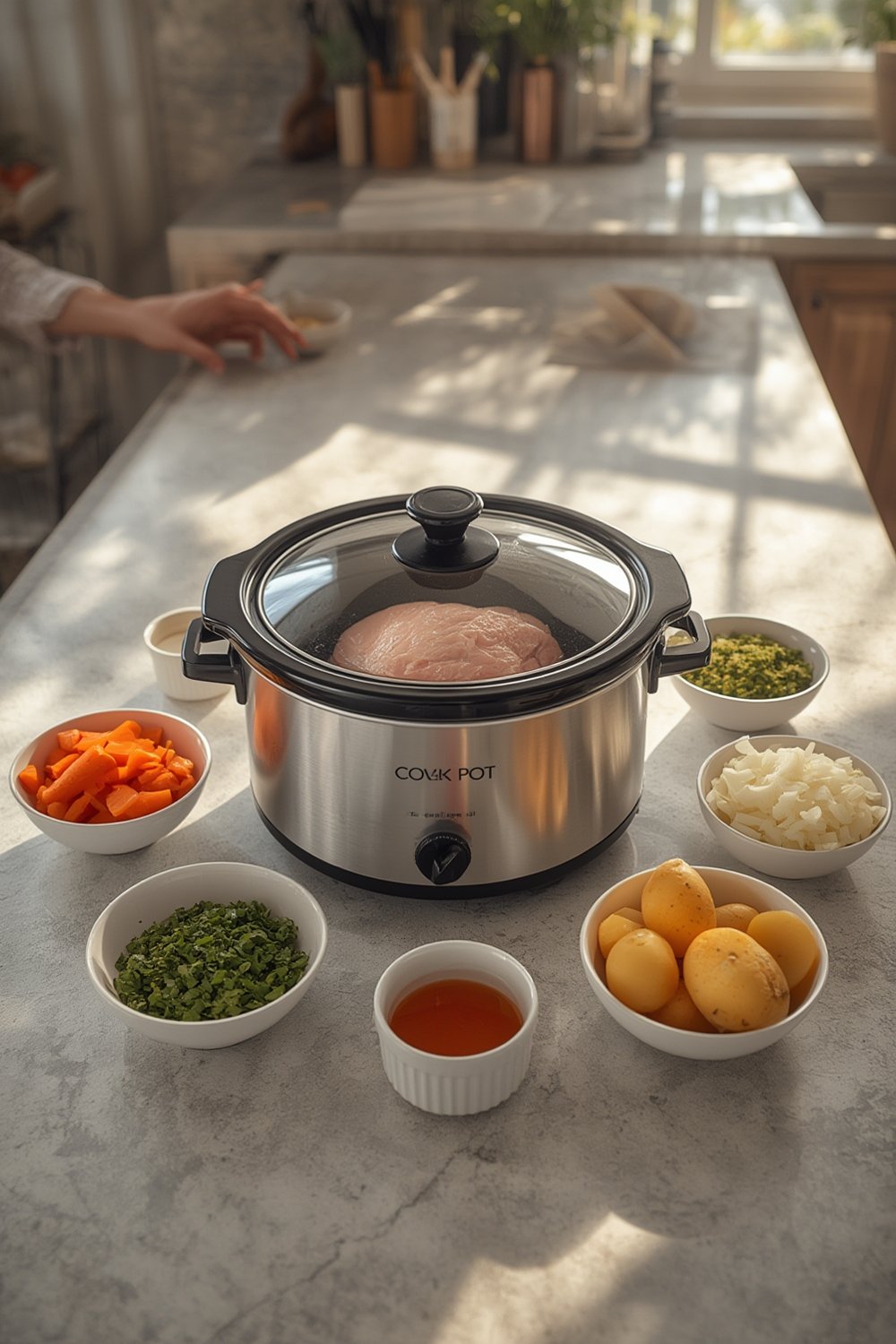
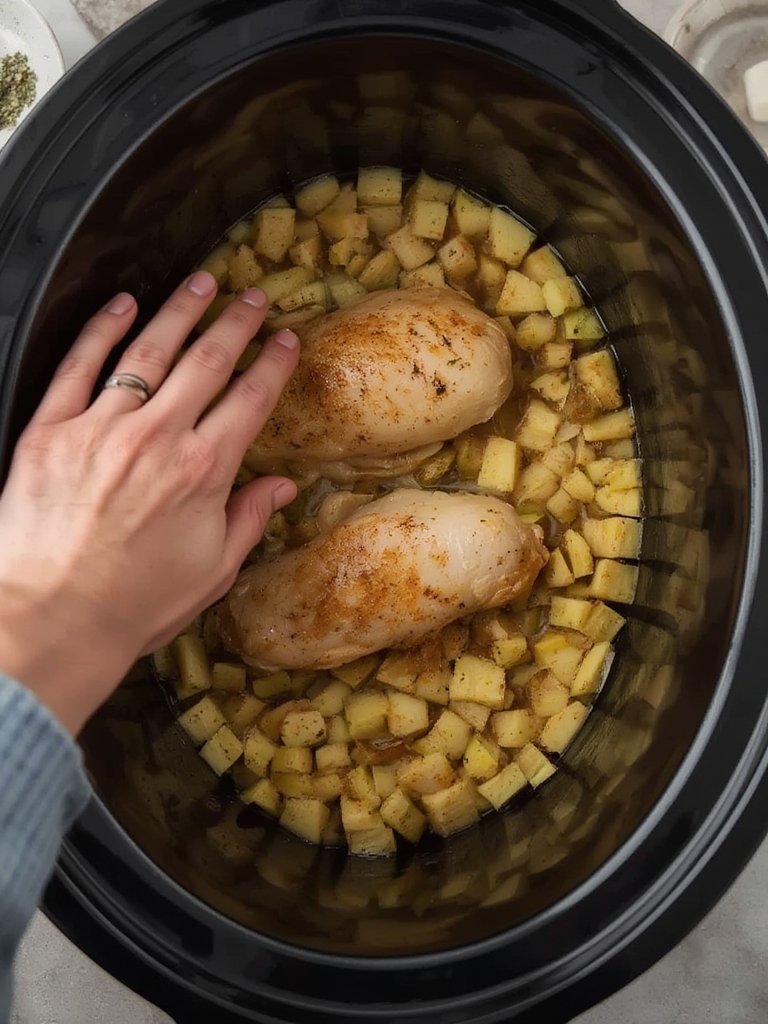
To get hands-on, try this simplest first recipe: Place 2.5 pounds of boneless, skinless chicken breast/thighs in a greased insert. Sprinkle salt, pepper, and 1 teaspoon of garlic powder. Add 1/2 cup chicken broth (less than you’d use for stovetop cooking). Cover, set to LOW for 5–6 hours. In the last 30 minutes, shred, then add 2/3 cup sour cream and fresh parsley, then finish cooking with the lid on. That’s all it takes to master essential skills—and get practical with your new appliance.
The most common beginner mistakes — and how to fix them step-by-step
It’s easy to miss a small detail in slow cooker setup, but common errors have fast, reliable fixes—here’s what to do if you hit a snag:
- Wrong size: If underfilled, reduce cook time and check early; if overfilled, remove excess liquid/ingredients to keep below three-quarters full.
- Adding dairy too early: Result is separated or curdled sauce. Fix: Only add dairy in the last 30 minutes—never at the start (source).
- Poor layering: Tough vegetables/meats on top = underdone. Fix: Place root vegetables and tougher cuts at bottom, proteins above (source).
- Wrong liquid amounts: Too soupy? Use 20–30% less than stovetop. Too dry? Add hot broth in small amounts, then cover and continue. (source)
- Lifting lid too often: Each peek loses crucial heat and adds up to 30 minutes. Fix: Only check once, 1 hour before scheduled finish.
- Using high heat unnecessarily: High can boil or toughen food. Fix: Low and slow means better results for 90% of meals.
- Not searing meat: Skipped browning = bland. Fix: Sear meat first in a skillet before adding to your slow cooker for a major flavor upgrade.
- Overfilling: Always stay under the three-quarters full mark or food will cook unevenly, stay unsafe, or overflow.
For even more first-timer adventures in hands-off cooking, be sure to check out devices like the Ninja Professional Blender 1000W or Emeril Lagasse Extra Large French Door Air Fryer Toaster Oven Combo for other smart meal-prep helpers.
Quick-start step-by-step guides (3 practical how-to’s every beginner needs)
1. How to scale a recipe to your crock size
- Check your insert capacity (usually printed on the bottom or in the manual).
- Adjust the recipe’s yield up/down so your ingredients will fill the pot halfway (minimum) to three-quarters (maximum).
- If scaling down, reduce both cooking time and liquid by about 25%—but always check doneness early.
2. How to convert a stovetop/oven braise
- Sear meat or aromatics in a skillet first for better flavor.
- Cut the noted liquid (broth/wine/sauce) down by 25–30% since slow cookers barely evaporate.
- Cook on LOW (preferred) for 6–8 hours, or HIGH for 3–4 hours.
3. How to finish for best texture and flavor
- Only add dairy or chopped fresh herbs in the final 30 minutes on LOW to prevent curdling/aroma loss.
- Want thick sauce? Remove lid for the last 30–45 minutes, or stir in a cornstarch slurry at the end.
- For shredded meat, lift out, shred with forks, then return to sauce to soak in flavor for final half hour.
Remember: Recipes are written for a certain size and fill ratio. If you stray, timings and outcomes can suffer (source). Add flavor boosters like dairy and fragrant herbs only in the final 30 minutes to prevent loss.
Flavor hacks and ingredient combos chefs recommend
Maximize your slow cooker’s flavor with these proven chef techniques:
- Sear your meat first on the stovetop (when appropriate). Browning adds richness you can’t get in a slow cooker alone (source).
- Use less liquid than in stove recipes. Excess liquid will leave a bland, soupy result—slow cookers don’t evaporate much.
- Add dairy and herbs late. Drop these in during the last 30 minutes for best taste and texture (source).
- Line the lid with a paper towel. This soaks up condensation—useful for non-soupy recipes (like barbacoa, pulled pork, or casseroles).
- Layer roots before meats. Dense veggies (potatoes, carrots, onions) go on the bottom. Proteins go on top to avoid undercooking.
- Avoid skin-on chicken (goes rubbery), plus skip high-end beef/pork cuts—cheaper, tougher cuts turn meltingly tender with a slow cooker (source).
- Limit alcohol (like wine) since it may not fully cook off in the enclosed slow cooker.
- Suggested pairing ideas: Beef + carrots/onion + red wine or beef broth | Chicken + lemon + thyme + white wine | Pork + apples + sage | For plant-based: Chickpeas + sweet potato + smoked paprika.
Explore modern kitchen aids like the Ninja BN701 Professional Plus Blender or BLACK+DECKER 12-Cup Coffee Maker for a complete meal-prep setup.
Safety and food-handling rules beginners often miss
- Always fully defrost any meats before adding to the slow cooker. Cooking from frozen risks unsafe zones for bacteria growth (source).
- Never pack food higher than three-quarters full—uneven heating is a serious risk.
- If possible, preheat the crock while you prep to jumpstart the safe cook temp.
- Internal temperature should reach at least 165°F for poultry; check with a thermometer at the thickest part near the end.
- Keep the lid firmly on. Every time you lift it, you drop the temp and slow cooking, increasing bacteria risk.
- After cooking, refrigerate leftovers in shallow containers within two hours.
- Hand wash the insert before it cools to prevent dried-on food and avoid contamination. For dishwasher-safe inserts or kitchen upgrades, see our Chefman TurboFry Touch Air Fryer XL 8-Qt Family Size review.
Troubleshooting common results (soupy, dry, undercooked, burnt)
| Result | Likely Cause | Fix Step-By-Step |
|---|---|---|
| Too watery | Too much liquid, minimal evaporation | Remove lid last 30 min to reduce; next time, add 20% less liquid from start |
| Dry/overcooked | Too little liquid, overcooked, thin or small batch | For now: Add hot broth and rest 10 min. Next time: Shorten cook time, fill halfway up |
| Undercooked | Overfilled, lid lifted too often, uneven layering | Stir, check for doneness, continue until hot through; start smaller batch next time |
| Burnt bottom | Too little liquid, insert too close to heating element | Don’t scrape burnt bits (prevents burnt flavor), transfer what’s salvageable |
Remember: too much liquid will never “boil off.” Do not attempt to scrape the bottom of a scorched crock—burnt flavor cannot be fixed. For reliable, tech-enabled appliances, consider upgrades like the Hamilton Beach Power Elite Wave Action Blender.
Choosing your first slow cooker — exact specs to prioritize in 2024
- Size: Choose based on your household. For singles/couples: 3–4 quarts. For families (4+): 6–7 quarts. Always pick a model you can routinely fill to at least halfway for best performance (source).
- Material: Ceramic or stoneware offers even heat and is easy to clean.
- Features: Simple HIGH/LOW/WARM settings are all you need; anything else is extra.
- Removable insert: Dishwasher-safe and oven/broiler safe is a plus.
- Heating element location: Models with bottom-only heating require good layering (roots down); all-around elements can be more forgiving.
- Avoid “high” setting for most dishes: Low is better for tenderness and texture.
While there’s no “perfect” brand for 2024, prioritize these practical features and consider appliance compatibility in a modern kitchen (see our tips for Nutribullet Ultra Personal Blender NB50500).
Energy costs & data transparency — what the research did (and didn’t) find
There are no reliable 2024 data points on the energy impact or cost comparisons of using a slow cooker versus stovetop or oven. Current search results show no evidence or updated utility rates. If you want to estimate for yourself, here’s the formula:
- Look up your slow cooker’s wattage (typically 150–250W on LOW).
- Multiply by hours used (example: 200W × 8h = 1.6 kWh).
- Multiply by your local kWh rate (e.g., $0.18/kWh). That’s 1.6 × $0.18 = $0.29 for an 8-hour simmer.
This transparency helps set real expectations and avoid unexpected costs, even if public utility data isn’t available.
Meal-prep sample plan + 3 beginner recipes (one-pot, freezer-to-crock, weeknight)
3-Day Meal-Prep Plan
- Day 1: Simple Pulled Pork (one-pot)
Fill: 3 lbs pork shoulder (shoulder/butt), fill to halfway. Rub with spice blend. Add 1 cup apple juice or broth.
Cook: LOW 8–9 hours.
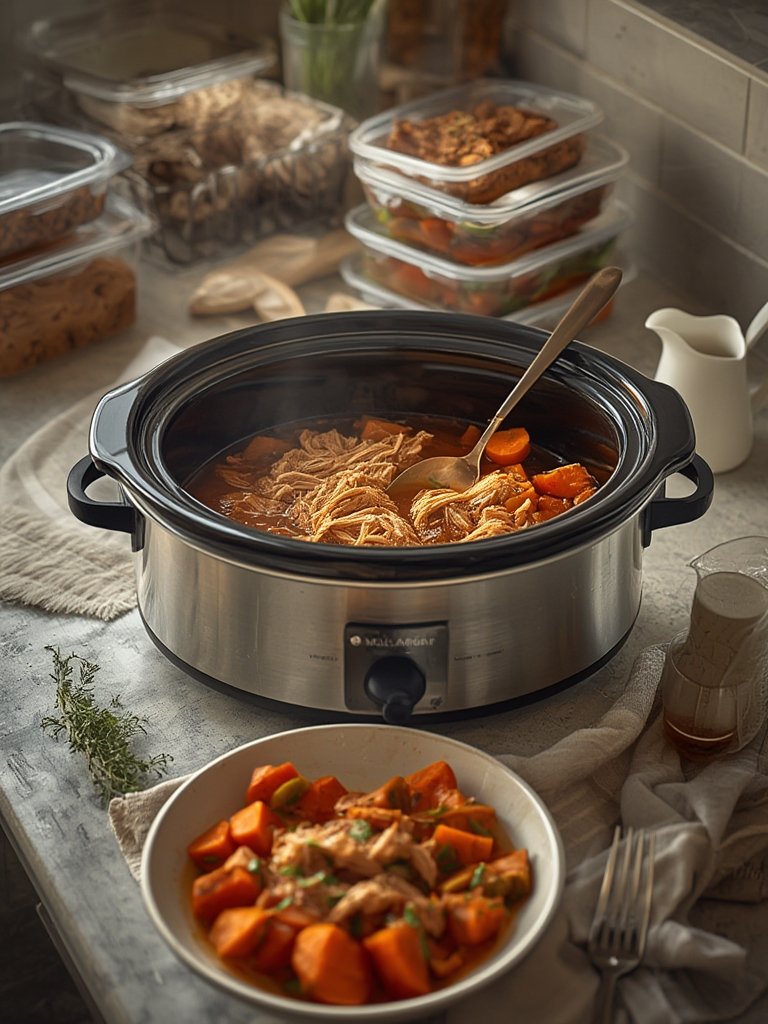
Finish: Shred, toss with 1/2 cup barbecue sauce in last 30 minutes, serve with quick slaw. - Day 2: Freezer Bag Vegetable Beef Stew (make-ahead/freezer-to-crock)
Bag up: 2 lbs beef stew cubes, 2 cups diced potatoes, 1 cup carrots, 1 diced onion, 1 cup broth, 1 tsp thyme.
Instructions: Thaw bag in fridge overnight. Pour in, cook LOW 8 hours.
Finish: Add 1/2 cup frozen peas and 2 tbsp fresh parsley last 30 minutes. - Day 3: Creamy Lemon Chicken (weeknight, with late dairy)
Fill: 2.5 lbs boneless, skinless chicken breast/thigh, 2 cups potatoes, 1/2 cup chicken broth, juice/zest of 1 lemon, 3 sprigs thyme.
Cook: LOW 6–7 hours.
Finish: Add 1/2 cup cream cheese and parsley last 30 minutes. Stir, taste, adjust.
For each recipe, always stick to the half–three-quarters-full fill rule, and remember to sear meat (especially for beef) before slow cooking. For advanced multitasking and tech features, investigate trending appliances like the Ninja Air Fryer, 10QT DoubleStack XL 2-Basket.
Quick-reference checklist & printable (what to remember every time)
- Fill insert only halfway to three-quarters full for even cooking.
- Layer root vegetables at the bottom, then meat/proteins on top.
- Sear all large cuts of meat before slow-cooking for best flavor.
- Reduce liquid by 20–30% from stovetop/oven recipes.
- Add dairy and fresh herbs only in the last 30 minutes.
- Keep the lid closed—each peek adds up to 30 minutes.
- Always fully defrost meat before loading into your slow cooker.
- Cheat-sheet for proteins: Poultry (165°F, 6–7h LOW), Pork shoulder (200°F, 8–9h LOW), Beef stew (200°F, 8h LOW).
For modern kitchen ease, check appliances designed to maximize results—see options like the Instant Pot Vortex 6QT XL Air Fryer.
FAQ
Can I put frozen chicken or beef directly in the slow cooker?
No. Always fully thaw meats first. Cooking from frozen keeps food in the danger zone for bacteria too long, according to experts. source
How do I adapt a regular recipe for the slow cooker?
Reduce liquid by about 25–30% (very little evaporates), sear meats, and cook on LOW for double the oven’s time, checking doneness near the end.
Why does my slow cooker meal always taste bland?
Usually, there’s too much liquid or you’re adding dairy/herbs too early. For bolder flavor, sear ingredients, reduce water/broth, and add finishing ingredients late.
Is it safe to leave my slow cooker on all day while I’m out?
Yes, as long as it’s not overfilled or underfilled and all ingredients start at fridge temperature, not frozen. Keep the lid on and the appliance on a heat-safe, stable surface.
Can I cook small batches in a big slow cooker?
Yes, but use a smaller oven-safe bowl set inside the insert to avoid underfilling. Add a little water around the bowl for even heating.
Learning how to use a slow cooker changes your meal routine by delivering hands-off, flavorful, and safe results every time. Use these practical steps, avoid the classic first-timer mistakes, and experiment with simple ingredient pairings for weekday ease. Start tonight with a low-stress recipe—and share your results, questions, or favorite flavor combos below!
—