

Inconsistent loaves and mixer motor headaches can leave even experienced bakers frustrated. If you dream of bakery-quality bread but your stand mixer bread dough comes out dense, over-warm, or just wrecks your machine, this guide is for you. Learn the precise, equipment-aware steps to dial in your mixer, adjust recipes, and troubleshoot like a pro—no fluff, just actionable fixes.
Key Takeaways
- Stand mixers require recipe and technique adaptations—especially for batch size, hydration, and mixing speed.
- Monitor dough temperature, RPM, and batch load to avoid motor strain or dough quality issues.
- Most user-reported issues (motor hesitation, hook-climbing dough, uneven crumb) are preventable with appliance-specific guidance.
- Why stand-mixer bread dough behaves differently than hand-kneaded dough
- Quick experimental checklist before you adapt any bread dough recipe for a stand mixer
- Critical mixer settings and timing most home bakers misunderstand
- Top 3 stand-mixer kneading tips authoritative guides often miss
- Common problems bakers report — diagnostic guide & fixes
- How to adapt popular bread dough recipes for reliable stand-mixer results (SOP)
- Stand mixer vs. hand-kneading — what the research can and cannot tell us
- Mixer specs and sizing guidance for bread dough — what to look for in 2024
- Safety, warranty and long-term maintenance considerations
- TL;DR troubleshooting flowchart and 7-point checklist to bake a successful loaf with your stand mixer
- Research gaps and recommended experiments for future updates
Why stand-mixer bread dough behaves differently than hand-kneaded dough
Most home stand mixers use a planetary mixing action (the hook orbits the bowl as it turns) while commercial bakeries often use spiral mixers. This difference matters: planetary mixers have less torque and operate at lower speeds—usually around 40 RPM on low, compared to commercial spiral mixers that run at 100 RPM low and 200+ RPM high. This lower speed, plus less muscle behind the dough hook, changes how rapidly flour hydrates, gluten develops, and how much heat builds up in your bread dough recipe.
If you use a typical stand mixer as if it were your hands or a commercial kneader, you risk under-mixing (uneven crumb, pockets of dry flour) or over-mixing (overheated, slack dough with weak gluten). Managing dough hydration, monitoring mixer speed (not just “low/medium” labels), and visually checking for a windowpane are essentials.
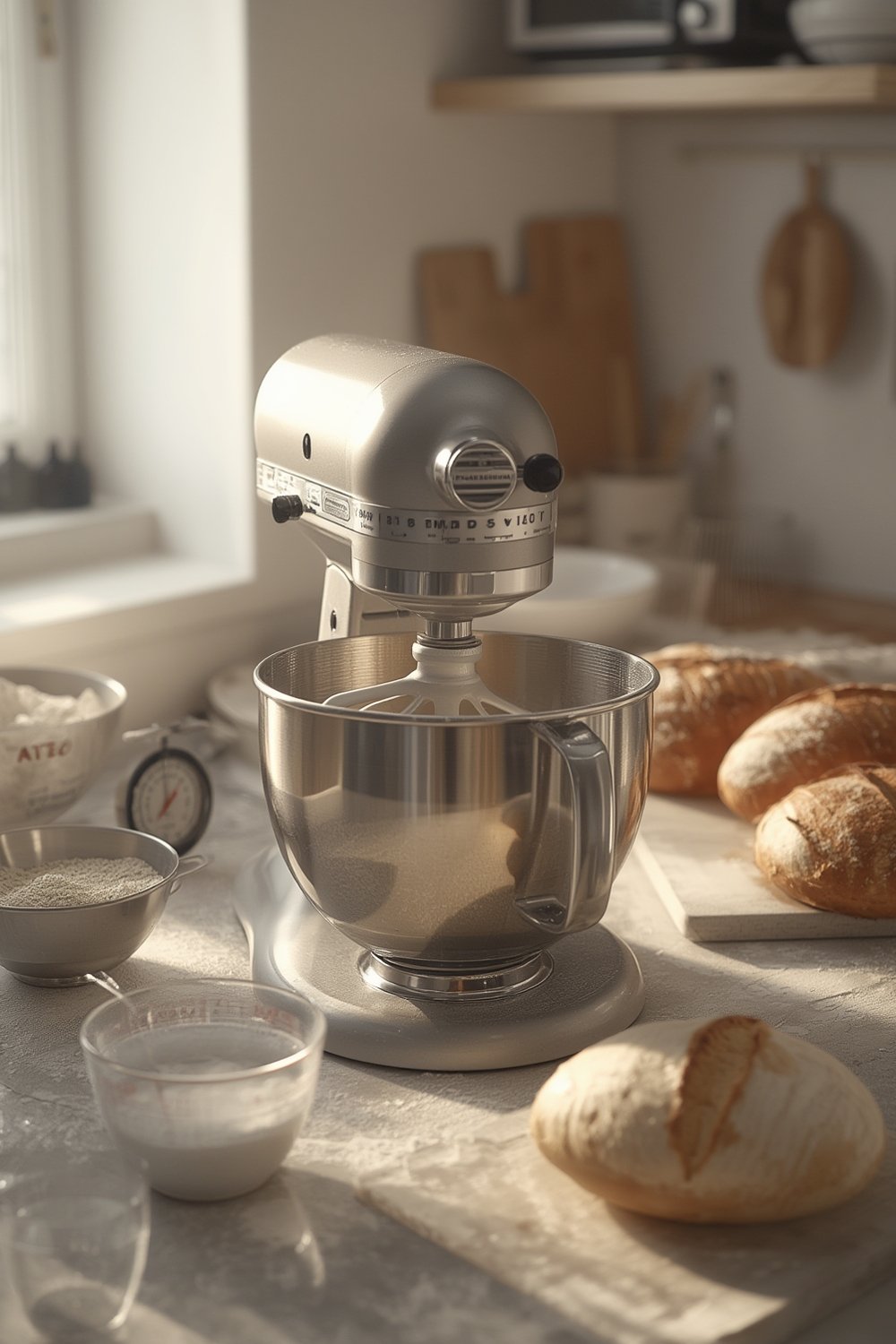
Quick experimental checklist before you adapt any bread dough recipe for a stand mixer
- Calculate batch size: Weigh your ingredients—do not exceed your mixer’s recommended max for bread dough (often 3-4 lbs total/7.5 cups flour for KitchenAid Pro 600, which can still struggle).
- Check hydration: Stiffer doughs stress home mixers; consider a slightly higher hydration if your mixer hesitates.
- Prep your ingredients: Use a digital scale for flour and water. Precision prevents unintended overloading and improves repeatability.
- Temp awareness: Use cold or ice water at the start to offset mixer friction—this helps keep dough below 78°F, protecting gluten structure.
- Attachment and bowl: Ensure you use the correct dough hook (spiral preferred) and that the bowl isn’t more than two-thirds full with dough, especially if baking back-to-back batches.
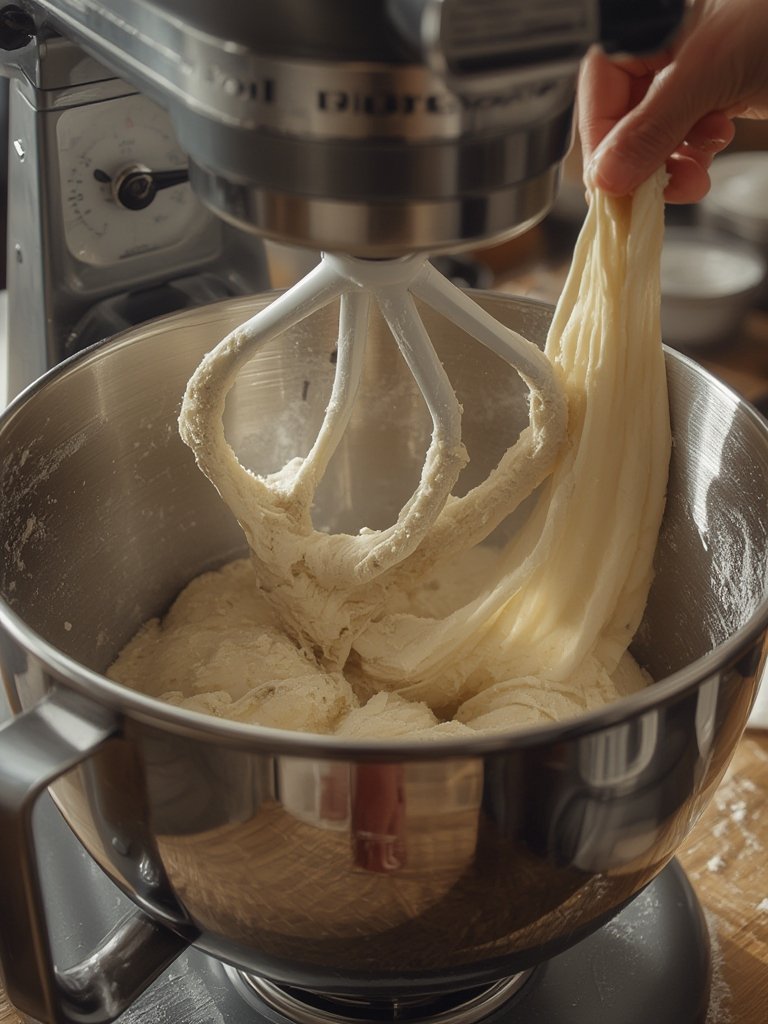
Critical mixer settings and timing most home bakers misunderstand
“Low” and “medium” don’t mean the same thing on every mixer. Research shows most stand mixer bread dough benefits from:
- 1–2 minutes at very low speed (speed 1 or similar) for initial flour/water incorporation.
- Switch to speed 2 (~100 RPM) for gluten development. This is fast enough to knead but unlikely to overheat the dough or the machine if you stay under 10 minutes total.
- Monitor dough temperature—aim for 76–78°F at the end of kneading. If the dough feels warm or sticky, stop mixing, let it rest, and check with a digital thermometer if possible.
- Every 2–3 minutes, stop the mixer and scrape down the sides, check for dough climbing the hook, and push it back as needed for even mixing.
If your mixer slows, hesitates, or gets noticeably hot to the touch, stop immediately, divide the dough, or finish by hand. For a detailed review of how compact mixers perform, see our review of the Kitchen in the box stand mixer for small batches.
Top 3 stand-mixer kneading tips authoritative guides often miss
- Target the right RPM—not just speed dial numbers: Most mixers hit about 100 RPM at speed 2, which develops gluten without overheating or stressing gears (source).
- Start cold—literally: Use cold or ice water, then check after 5 minutes. Dough temps climb quickly due to friction. This is especially vital in warm kitchens or if your mixer runs hot.
- Know your mixer’s capacity and torque limits: Planetary home stand mixers can struggle with big, stiff batches. If your dough is fighting back or the mixer hesitates, reduce batch size or switch to a spiral hook (if included).
Extend your kitchen’s efficiency with tech-driven helpers too. Consider the Instant Pot Vortex 6QT XL Air Fryer for quick meals while your dough rests!
Common problems bakers report — diagnostic guide & fixes
Most user challenges with stand mixer bread dough fall into a few patterns. Here’s how to diagnose and fix each:
| Symptom | Likely Cause | Actionable Fix |
|---|---|---|
| Dough climbing up the hook | Batch size too large Hydration off Not scraping often | Pause every 2–3 min, push dough down Reduce recipe size Try a spiral hook if available |
| Motor strain/hesitation | Too much dough by weight Dough too stiff Extended mixing time | Limit batch to <4 lbs Increase hydration slightly Use cold water, rest motor if warm |
| Uneven kneading or hydration | Insufficient mixing time or scraping Improper hook placement | Mix 1–2 min low, then speed 2 Scrape sides, test for homogeneity |
| Over-warm, sticky dough | Mixing too long Warm ingredients Inefficient hook | Use chilled water Shorter mix, check after 5 min Rest/delay before shaping |
Read more user stories and fixes at Modernist Cuisine and the Baking Forums KitchenAid struggles thread.
How to adapt popular bread dough recipes for reliable stand-mixer results (SOP)
- Scale ingredients to never exceed 3.5–4 lbs final dough weight (check manual if unsure).
- Adjust hydration up 2–4% if your mixer stalls (replace 2 Tbsp flour with water per 500g flour).
- Use cold or ice water to offset frictional heating.
- Initial mixing: 1–2 min low speed to combine, then switch to speed 2 (~100 RPM) for gluten development.
- Check dough temperature after 5 min; if it nears 78°F, finish kneading by hand.
- Windowpane test: Stretch dough gently after 5-7 min; if you can pull it to translucency without tearing, kneading is done.
- Bench rest: Always rest dough in the bowl for 10–15 min before shaping to let gluten relax.
If your kitchen setup is compact or you’re baking frequently, explore our guide to choosing a small stand mixer for your kitchen.
Stand mixer vs. hand-kneading — what the research can and cannot tell us
Home stand mixers save time and reduce labor, especially with regular baking. However, research offers no quantitative comparison on kneading times, gluten development, or final loaf quality between stand mixer bread dough and hand-kneading. Bread dough recipe results vary by hand strength, mixer torque, batch size, and water temperature (source).
How to test for yourself: Next time, knead a half-batch by hand and a half-batch with your mixer using the same recipe and water temp. Compare dough texture, windowpane timing, and loaf crumb side-by-side. There’s no substitute for controlled, side-by-side comparison in your own kitchen.
Take advantage of digital appliances for a streamlined workflow. For seamless meal prep on baking day, check out the versatile Emeril Lagasse Air Fryer Toaster Oven.
Mixer specs and sizing guidance for bread dough — what to look for in 2024 (and gaps to be aware of)
- Bowl capacity: Look for 5–7 quarts for home baking; but some 6 qt models like KitchenAid Pro 600 still hesitated at 3.5–4 lbs dough (anecdotal data).
- Motor wattage/torque: No consolidated 2024 spec list exists, but more watts does not always mean more torque for bread—user forums are often more telling than manufacturer brochures.
- Duty cycle: If you plan back-to-back batches, check if your mixer can run for more than 10 minutes straight without overheating.
- Estimate max dough load: As a rule, do not fill bowl above two-thirds with dough by volume or weight.
See our detailed Ninja Professional Blender review for more appliance specs and power comparisons.
Safety, warranty and long-term maintenance considerations
Straining your mixer with oversized bread dough loads or long mixing sessions puts both the motor and your warranty at risk. Recent user feedback indicates repeated failures even after warranty replacements, especially with planetary mixers working near their max load.
- Watch for: motor hesitation, burning smell, pause-and-stop cycles. These are warning signs—stop mixing immediately.
- Usage limits: Keep dough below manufacturer’s maximum by at least 10%. Allow time for motor & gears to cool between sessions, clean hooks and bowl thoroughly after every batch.
- Maintenance: Inspect the beater shaft and bowl mount every few months. Unusual noise or wobble means service is overdue.
Read warranties closely; some specifically exclude bread dough stress. If your unit repeatedly fails, consider smaller batch baking or models with spiral mixing action.
Enhance your workflow with the Ninja 12-Cup Programmable Coffee Brewer for stress-free mornings.
TL;DR troubleshooting flowchart and 7-point checklist to bake a successful loaf with your stand mixer
- Weigh all ingredients—never exceed max bowl capacity or 4 lbs dough.
- Start with ice water. Pre-chill bowl if your kitchen runs warm.
- Mix 1–2 min on lowest speed to blend, then switch to speed 2 for gluten.
- Pause every 2–3 min to check dough temperature and scrape sides.
- If dough climbs the hook or mixer slows, pause and push down, or split the batch.
- Look for the windowpane when stretching dough after 5–7 min.
- Rest dough 10–15 min post mixing before shaping for best texture.
Reference our Ultimate Smoothie Blender Review for more kitchen optimization ideas.
Research gaps and recommended experiments for future updates
Despite the focus on stand mixer bread dough, several data gaps remain:
- No current statistics on how many home bakers use stand mixers for bread dough in 2024.
- No published quantitative comparison of stand mixer vs. hand-kneading for gluten development time, loaf quality, or crumb structure.
- A lack of up-to-date, consolidated 2024 specs for mixer torque, duty cycle, and recommended bread dough load.
Want to help close the gap? Try this at home: Run side-by-side doughs with hand vs. mixer, measuring kneading time, dough temperature, and windowpane test timing. Join baking forums and post your outcomes—community-driven data is what will move this topic forward.
For small spaces, we recommend reading our guide to the best compact stand mixer for bread and general baking.
Conclusion
If your stand mixer bread dough has frustrated you, stop guessing. Start weighing, adapt your bread dough recipe before the motor heats up, mix at the right RPM, and keep batch sizes equipment-appropriate. These practical, researched tips make loaf consistency—and mixer longevity—far more achievable. Put these techniques to work and bake your most reliable bread ever.
Ready to conquer your next loaf? Apply these stand mixer kneading tips and share your results or discoveries—your feedback helps the whole baking community.
Frequently Asked Questions
Why does my dough climb the stand mixer hook?
This usually happens when the batch is too big, the dough is too stiff or sticky, or you don’t pause to scrape it back down. Always mix in manageable quantities, watch dough consistency, and stop to push it down every few minutes.
How can I prevent my stand mixer from overheating with bread dough?
Mix only as much dough as your mixer can handle (generally under 4 lbs), use cold ingredients, limit mix time to under 10 minutes, and let the mixer cool between batches. If the motor stalls or the case feels hot, stop mixing at once.
What’s the best speed/RPM for kneading bread dough in a stand mixer?
Use speed 2 on most home machines, which is about 100 RPM. Start with 1–2 minutes on low for combining, then switch to speed 2 for gluten development. Don’t use higher speeds for stiff dough.
Do I need to alter hydration or ingredients for a bread dough recipe in my mixer?
Sometimes. If your mixer hesitates, increasing hydration by 2–4% and reducing batch size can make mixing easier and yield better results.
Is there any risk to my warranty mixing heavy bread dough with a stand mixer?
Yes. Manufacturer warranties may exclude damage from overloading the machine with bread dough. Always check your manual, don’t exceed recommended batch sizes, and stop if you hear straining sounds or notice hesitation.