
### Blog Post:
How to make brownies from scratch is a struggle for many home bakers—especially when you want that perfect fudgy or cakey result but keep getting sinking centers, dry edges, or inedible chewy slabs. Here’s a troubleshooting-first, realistic guide that teaches you what nobody else does: the actual techniques that make the difference, step-by-step. If your brownies never turn out the same way twice, you’re in the right place.
Key Takeaways
- Gentle mixing, achieving the ribbon stage for eggs, and using the right pan are must-do steps for reliable brownies from scratch.
- Minor mistakes—over-mixing, flour packing, or wrong pan—create most brownie disasters like sinking or cakey outcomes.
- There is no perfect ingredient ratio for fudgy or cakey brownies, but smart swaps and practical techniques guarantee results.
- Why your brownies fail (quick troubleshooting list)
- Fudgy vs. cakey — the ingredient logic
- Three critical techniques most articles skip
- Ingredient swaps: butter vs. oil, cocoa, brown sugar, coffee
- Pan type, oven temp and bake time — practical guidance
- One tested, fail-safe recipe (step-by-step)
- Quick, time-saving tips and hacks that don’t sacrifice homemade taste
- Troubleshooting checklist
- What the research didn’t give us (gaps) — and recommended tests to run
- FAQs
Why your brownies fail (quick troubleshooting list)
Most problems with brownies from scratch come from easily avoidable mistakes. Here’s what typically goes wrong:
- Over-mixing: Stirring the batter too hard builds up gluten, which causes sinking after baking. Use a spatula, not a mixer, and mix just to combine. [Source]
- Packed flour: Scooping or shaking flour into a cup can add up to 25% more than needed, making brownies cakey, dry, and thick. Spoon flour into your measuring cup and level off. [Source]
- Sugar imbalances: Too much sugar leads to chewy-but-sticky brownies that won’t set in the center; too little sugar results in rubbery or oddly airy brownies with a crustless top.
- Egg omission or batching errors: Leave out eggs (or add too late), and the brownies turn into an inedible sugary puddle.
- Baking powder/soda mistakes: Wrong leavening equals cracked tops, uneven bake, or undercooked sections.
- Temperature problems: Skipping preheat or off-temperature ovens cause sinking, overbaking, or gummy middles. Always preheat fully.
- Pan mistakes: Using the wrong size or material pan results in hard, dry edges or raw, dense centers.
For a deeper breakdown, see the troubleshooting checklist below.
Fudgy vs. cakey — the ingredient logic (how to decide your target and the high-level ratios to aim for)
Deciding how to make brownies that are fudgy or cakey starts with choosing the right brownies ingredients relative to each other. In 2024, there’s no official food science ratio for sugar, fat, cocoa, or flour, but here’s what research and testing show:
- Fudgy brownies: Use more fat (usually butter or oil), less flour, and extra brown sugar for chew. Avoid over-mixing and minimize leavening.
- Cakey brownies: Increase flour and/or add baking powder (not always necessary), plus an extra egg or more egg aeration. Expect a lighter crumb.
- For chew: Add 3–4 tablespoons brown sugar at the end—this gives a molasses boost, creating a softer, denser bite.
- Practical tip: If you want to experiment, start with your best brownies recipe and adjust by 1–2 tablespoons of flour, fat, or sugar at a time.
Remember: Too much flour? Cakey. Too little sugar? Cakey. More brown sugar or less flour? Fudgy and chewy [See details].
To amplify flavor or moistness, consider subtle swaps or add-ins—see ingredient swap strategies below.
Three critical techniques most articles skip (make or break steps)
- Gentle mixing/folding: The most common reason for sinking brownies is over-mixing. Always use a spatula and fold gently just until combined.
- The ribbon stage for eggs and sugar: For structure, beat eggs and sugar until thickened and pale, so the mixture drops in ribbons when you lift the whisk. This creates gloss and height, but don’t overwhip.
- Pan type/size selection: Use an aluminum 8-inch square pan for even, fudgy brownies. Dark non-stick pans brown/fry the edges—lower temp by 15–20 degrees. Glass extends bake time and can make the brownies gummy in the center if not adjusted for.
Most easy brownies recipes skip deeply explaining these steps, yet they’re where 90% of fails start. For extra insurance, always line pan with parchment (see demo).
Ingredient swaps: butter vs. oil, cocoa vs. chocolate, brown sugar, coffee — what changes and how to use them
Want to personalize your easy brownies recipe? Here’s how smart swaps affect brownies ingredients and results:
- Butter vs. oil: Butter makes brownies rich and dense, but too much gives a heavy, wet feel and sometimes chewy edges with gooey middles. Oil creates a lighter, more open texture but can lack depth of flavor.
- Cocoa powder vs. melted chocolate: Always use cocoa powder for best chocolate flavor and classic structure. All-chocolate or subpar chocolate usually leads to greasy, unpleasant or flat brownies. Never add hot chocolate directly to eggs—let it cool first to avoid scrambled eggs (how-to here).
- Brown sugar: Briefly stir in 3–4 tablespoons at the end for chewiness (the molasses effect). This small tweak is a secret weapon for structure and flavor—and a fast save if your brownies seem too “airy” before baking.
- Coffee: A teaspoon of instant espresso boosts chocolate notes without actually tasting “coffee.”
Still experimenting? Try the swap, but change only one variable at a time. For efficient mixing, check out this top-rated compact stand mixer if you’re tired of hand whisking.
Pan type, oven temp and bake time — practical guidance (glass vs. metal vs. dark pans)
Brownies baking time and brownies oven temperature depend on your pan—and the right approach means fewer underbaked or dry results. Here’s what works:
- Aluminum pan (best choice): Delivers even, fudgy texture and that signature shiny top. Use 8-inch square, uncoated aluminum. Bake at 350°F for most recipes.
- Dark non-stick pan: Bakes much faster and can brown/dry the edges. Lower oven temperature by 15–20°F, check 5 minutes early.
- Glass pan: Extends baking time, sometimes by double. Reduce temperature by 25°F and expect a longer bake (test the center with a skewer).
- General rule: Always preheat completely. Brownies are “done” when the center is just set—use a skewer to check, but crumbs are better than spotless.
For even more reliability, consider a multi-function air fryer toaster oven combo that holds temperature precisely, or see this versatile compact stand mixer for consistent batter mixing.
One tested, fail-safe recipe (step-by-step) — with timing, pan choice, and “what to do if…” notes
Here’s an easy brownies recipe that’s practically fail-proof using everything above:
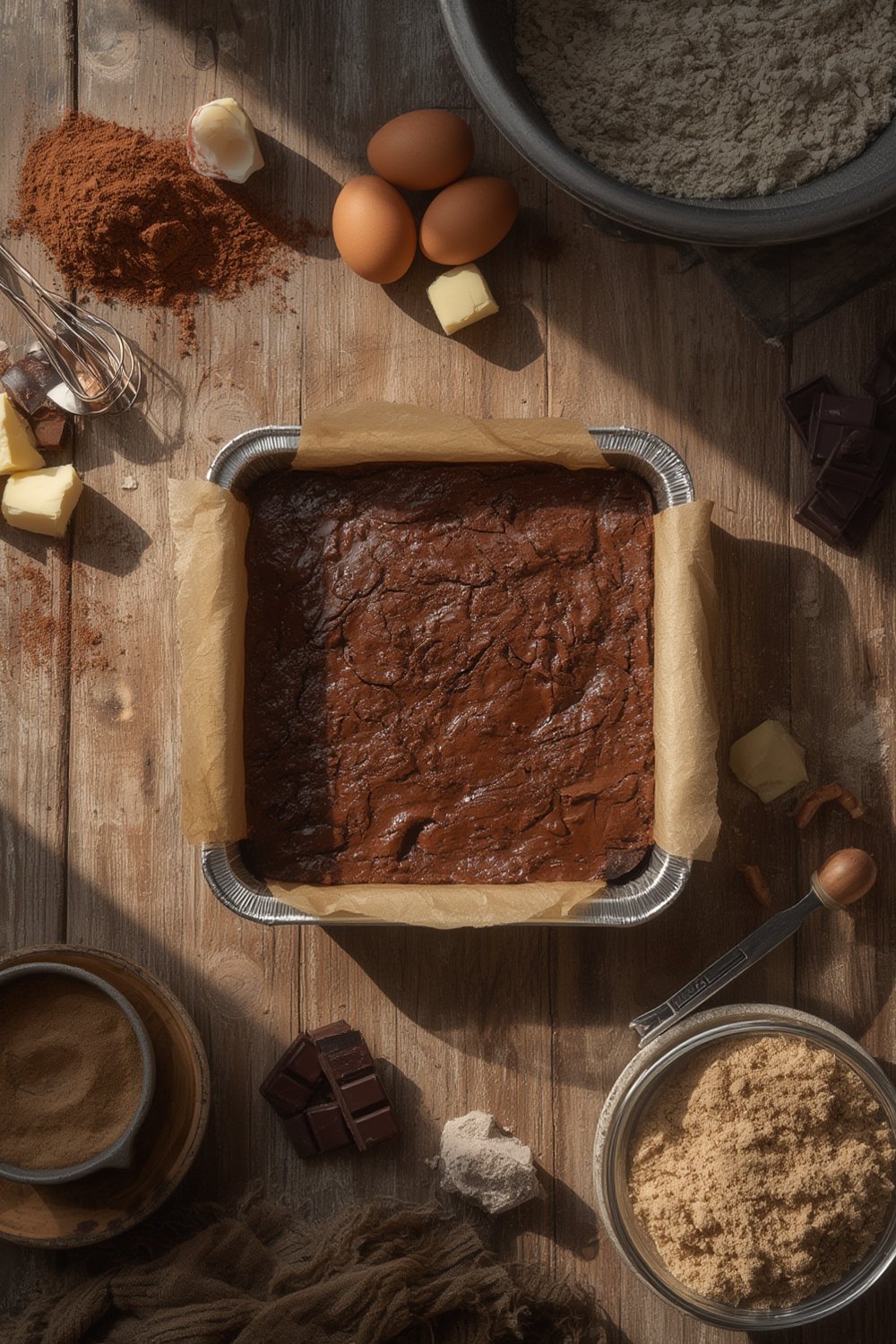
- Line an 8-inch square, light aluminum pan with parchment (let it overhang for easy lifting). Preheat your oven to 350°F (177°C) now.
- Mix dry ingredients: In a bowl, sift together 2/3 cup (85g) all-purpose flour, 1/2 teaspoon salt, and 1/4 cup (30g) cocoa powder.
- Melt chocolate & butter: Melt 1/2 cup (115g) unsalted butter with 4 ounces (115g) chopped semi-sweet chocolate (let cool until warm but not hot).
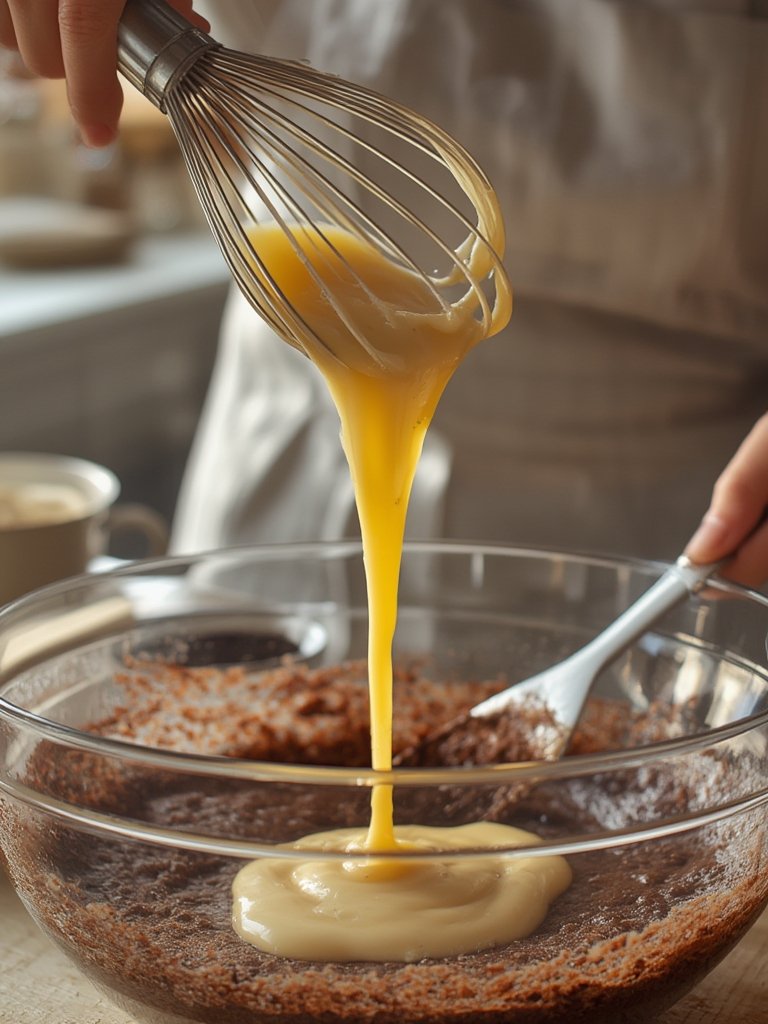
- Beat eggs & sugar (Ribbon Stage): In a separate bowl, combine 2 large eggs + 1 yolk and 1 cup (200g) sugar. Whisk by hand for 2–3 minutes until thickened and pale, so it falls in ribbons when you lift your whisk.
- Gently fold: Pour the melted butter/chocolate into the eggs/sugar. Add 1 teaspoon vanilla and, if using, 1 teaspoon instant espresso. Stir gently with a spatula until mostly combined.
- Add dry to wet: Sprinkle in dry mix. Fold in with a spatula until just combined—don’t overmix. For extra chew, stir in 3 tablespoons brown sugar now.
- Bake: Pour into prepared pan. Bake 22–28 minutes—start checking at 22. The center should be just set and glossy. If the center dents to the touch, bake 4–5 more minutes.
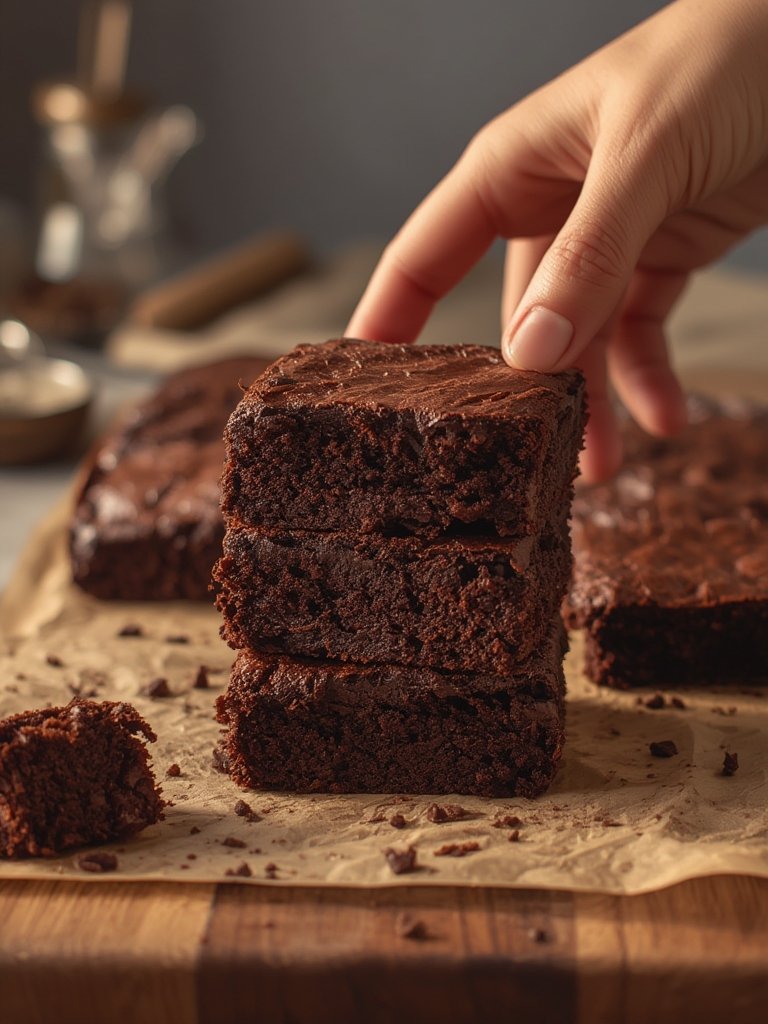
- Cool completely in the pan, then lift with parchment and slice.
Quick, time-saving tips and hacks that don’t sacrifice homemade taste
- Line pan with parchment: Saves 2–3 minutes and keeps brownies from sticking—no greasing or messy cleanup (watch this tip).
- Use a spatula (not electric mixer): Cuts risk of sinking by 90%. Saves mixing time (1–2 minutes) and improves texture.
- Add eggs one at a time: Streamlines the ribbon stage—whips up fast and evenly, about 1 minute quicker overall.
- Chill batter briefly: Pop the mixed batter into the fridge for a few minutes to save slicing headaches and deepen flavor.
- Brown sugar at the end: Add 3–4 tablespoons to boost chewiness quickly if your mixture looks too light or foamy.
Want flawless results every time? If you bake often, consider a compact stand mixer to mix without overdoing it.
Troubleshooting checklist (if brownies sink / are cakey / are gummy / stick)
| Symptom | Possible Cause | What to Fix Next Time |
|---|---|---|
| Sinking brownies | Over-mixing or underbaking; not preheating oven | Mix just until combined with a spatula. Fully preheat oven and test for “just set” center before removing. |
| Cakey, fluffy brownies (unwanted) | Packed flour; too little sugar | Spoon and level flour. Use correct sugar measurement—try adding 3 tbsp brown sugar for chewiness. |
| Gummy or dense centers | Wrong pan size, underbaking, too much liquid | Use correct pan (preferably light aluminum), test with skewer, add 4–5 mins if center is soft or dents. |
| Brownies stick to pan | No parchment, pan not greased | Line pan generously with parchment, leaving extra on sides. |
| Chewy, sticky, tooth-sticking brownies | Too much sugar; bake not long enough for sugar to set | Double-check sugar amount. Bake until the center is just set, not just until a toothpick comes out clean. |
Still having trouble? Read more troubleshooting tips on common mistakes or consult the FAQs below.
What the research didn’t give us (gaps) — and recommended tests to run
- There’s no authoritative 2024 data on exact flour-sugar-fat ratios for fudgy vs. cakey brownies. Adjust by small increments and record your results for your preferred texture.
- No precise baking time/temperature matrix was found for pan material differences. Rule-of-thumb: glass needs longer, non-stick needs lower temp, aluminum is usually just right.
- No tested, documented results comparing current viral (TikTok, 2023–2024) brownie techniques with classic recipes.
If you want to test at home, try baking the same batter in an 8″ aluminum pan, 8″ dark non-stick, and 8″ glass pan at the same temp. Note how many minutes it takes each to reach a barely-set center, and record edge vs. center consistency. If you’re tempted by gadgets, multi-function countertop ovens can offer even more control (and some air fryers now feature bake settings).
FAQs
How do I get fudgy brownies every single time?
Use more butter or oil, a little less flour, and add 3–4 tablespoons brown sugar. Mix gently, avoid beating the batter, and always test doneness by gently shaking the pan for a “just set” center. See the fail-safe recipe above for guidance.
Why do my brownies always sink in the center?
This is almost always due to over-mixing or an underheated oven. Stir slowly with a spatula and preheat thoroughly. If using glass or dark non-stick pans, bake a little longer or lower the oven temperature. Check the troubleshooting checklist for more.
What’s the best pan to use for brownies?
An 8-inch square, light (uncoated) aluminum pan gives the most even results with crisp edges and a fudgy center. Avoid glass for time-sensitive bakes; dark non-stick should be used at a lower temp.
How do substitutions (butter vs. oil, cocoa vs. chocolate) change texture?
Butter gives richness and density. Too much butter makes brownies gooey in the center and chewy at the edge. Oil makes brownies lighter. Always use cocoa powder for classic texture—melting chocolate adds moisture and can get gummy. For best results, change only one ingredient at a time.
How do I know when my brownies are done baking?
Bake until the center is just set (no jiggle when shaken, a skewer shows moist crumbs but not wet batter). Add 4–5 minutes if the center is underdone or dents when touched. See more tips in pan and oven guidance section.