

Air fryer vs traditional Oven which is more energy efficient? If you’ve ever juggled small weekday meals and the occasional big roast, you’ve asked this question. This realistic guide reveals the trade-offs, the numbers, and a clear break-even rule—so you can minimize costs, save energy, and cook smarter for your 2026 kitchen.
Key Takeaways
- For most small daily meals, air fryers use three to six times less energy per session than traditional ovens—think $8–15/month for air fryers versus $25–35/month for ovens if used daily.
- Ovens become more efficient for large portions or cooks that last longer than about 78 minutes—know your typical batch size to decide what’s best for you.
- Preheating, meal size, and appliance capacity are crucial—multiple air fryer sessions for big batches can erase all your energy savings.
- Quick answer — Which is more energy efficient for everyday cooking?
- How these appliances use energy — wattage, heat strategy, and why it matters
- Meal-by-meal energy comparison (real examples: fries, wings, sheet-pan, roast)
- Preheating, warm-up behavior, and hidden energy costs
- The break-even insight — when the oven becomes more efficient than an air fryer
- Capacity and batch-cooking trade-offs — why small baskets can erase savings
- Costs beyond energy — purchase price, expected lifespan, and maintenance
- Environmental impact & carbon implications (how to estimate per-use emissions)
- Real-world performance trade-offs: taste, texture, and nutrition
- Frequent user complaints and practical pain points
- Practical recommendations — which to buy and how to use each to maximize efficiency
- Buying guide 2026 — specs to look for and model shortlist
- Sources, methodology notes, and further research the writer should do
Quick answer — Which is more energy efficient for everyday cooking?
If you’re cooking quick, small to medium meals (like fries, nuggets, or two chicken breasts), an air fryer is almost always more energy efficient—using approximately 0.3–0.6 kWh per meal, compared to an oven’s 1.5–2.5 kWh for a similar job. That’s three to six times less energy for small sessions (source). But if you cook large roasts or full trays, or your cook time stretches past 78 minutes, a traditional oven can actually be more efficient, especially for big families or special occasions. The right pick comes down to your meal size, frequency, and time spent cooking.
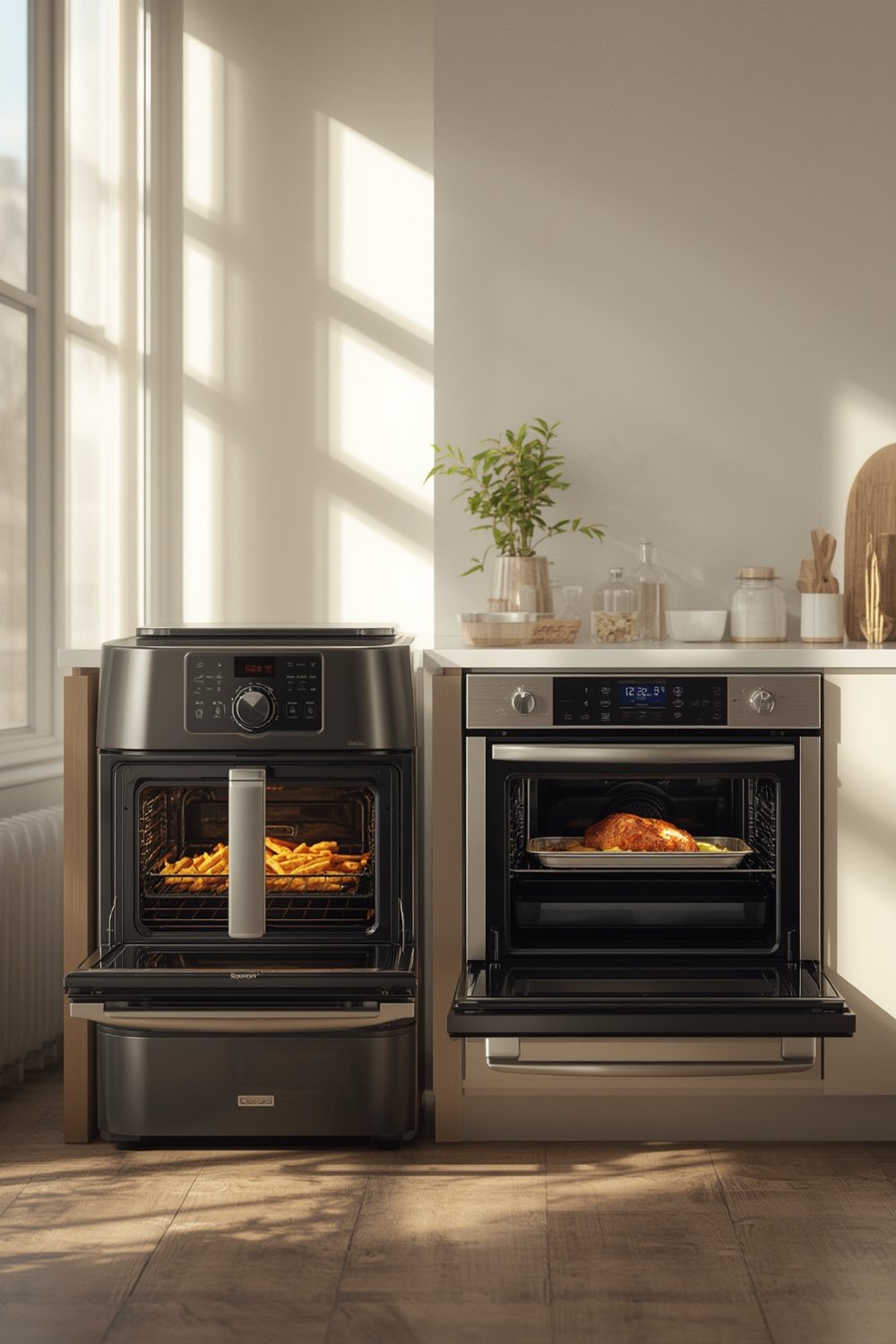
How these appliances use energy — wattage, heat strategy, and why it matters
Let’s break down the technical bits. Air fryers typically use between 1,200–1,800 watts (most are 1,500W), while traditional ovens draw 2,000–5,000 watts (average about 3,000W). Air fryers heat a compact chamber with a strong fan, so they cook food faster and more evenly for small portions. Their heating element runs about 60% of the cooking time after warmup. Ovens have larger, better insulated cavities, run their element at about 43.75% after warmup, and lose less heat over time. But their higher overall wattage and long preheat often dominate short-to-medium sessions.
In summary: for quick small meals, an air fryer’s smaller space and rapid air movement win. For longer sessions or big trays, the oven’s insulation and larger volume start to pay off.
Meal-by-meal energy comparison (real examples: fries, wings, sheet-pan, roast)
How does this look in daily life? Here are real numbers mapped to common foods:
- Chips/fries (2 portions): Air fryer: ~193 Wh (0.193 kWh), Oven: ~343 Wh (0.343 kWh). The air fryer uses just over half the energy. [source]
- Chicken wings (8 pieces): Air fryer: 0.3–0.6 kWh (about 15–20 mins), Oven: 1.5–2.5 kWh (about 40 mins). [source]
- Sheet-pan dinner (serves 4): Air fryer may need two cycles (ending up near 0.6–1.1 kWh), Oven can do in one (about 2.2–2.5 kWh including preheat).
- Family roast (~2kg chicken): Air fryer (if it fits): 0.8–1.2 kWh (multiple cycles likely), Oven: 2.5–3.2 kWh but in one session. For occasional big cooks, oven’s time/energy advantage grows.
At the U.S. average electricity rate (about $0.16/kWh), these differences can add up fast if you cook daily.
Preheating, warm-up behavior, and hidden energy costs
Air fryers either skip preheat altogether or need just 3–5 minutes. Ovens, however, frequently require 10–20 minutes, using up to 137 Wh of power just to reach temp (source). If you’re only cooking for 10–15 minutes, preheat can make up a major chunk of total consumption—up to 40% in short oven runs. For large, extended cooks, preheat is less painful because it “dilutes” across a longer session.
The break-even insight — when the oven becomes more efficient than an air fryer
Here’s the most actionable rule in this whole article: Ovens start to become more energy efficient than air fryers when you’re cooking large meals, big trays, or food that takes longer than around 78 minutes. Why? The initial oven preheat “penalty” is overcome by its lower per-minute element draw and superior insulation. Analysis shows the preheat break-even at 32.5 minutes, and the full cycle threshold at 78 minutes. For most households and cooks, you’ll rarely cross these numbers—unless you often batch roast or bake at scale.
When in doubt: for less than an hour, use your air fryer if it fits. Over an hour and for big family batches, your oven usually wins on energy if you don’t have to run multiple rounds.
Capacity and batch-cooking trade-offs — why small baskets can erase savings
Air fryers shine at quick, small-portion meals, but most models have a basket that handles only two to four servings. That’s a problem for big families or entertaining. If you need to run back-to-back sessions to finish one meal, your air fryer’s energy and time savings vanish: multiple cycles can even use more total energy and stretch dinner into a marathon of cook-wait-repeat. Ovens, with their one-tray-bakes-all design, let you cook big batches in a single go—reducing energy used per serving.
If you frequently cook for a crowd, consider a large air fryer like the Chefman TurboFry® Touch Air Fryer XL or all-in-one combo ovens such as the Emeril Lagasse Extra Large French Door Air Fryer Toaster Oven Combo. Otherwise, batch cooking tips become crucial—see below.
Costs beyond energy — purchase price, expected lifespan, and maintenance (what we know and gaps to fill)
The energy numbers show clear savings, but what about upfront price, lifespan, and maintenance? Most air fryers cost less up front than full-size ovens, but reliable 2026-specific price and lifespan data is simply missing—no authoritative studies or databases are available.
Typical U.S. energy costs: Oven $25–35/month for daily use, smart air fryers $8–15/month (source). But for purchase price or years-to-break-even, always check the latest manufacturer specs and databases like Consumer Reports. Also, check the warranty—many air fryers are rated for 3–5 years of service with basic cleaning, but hard numbers are rare. This lack of independent maintenance data is a research gap you should be aware of.
Environmental impact & carbon implications (how to estimate per-use emissions)
If you care about your footprint, energy use translates directly to carbon emissions (assuming your utility isn’t full renewable). U.S. grid average is about 0.92 pounds of CO2 per kWh. So, every small meal in an air fryer (0.3–0.6 kWh) equals 0.28–0.55 pounds of CO2, while a typical oven session (1.5–2.5 kWh) means 1.38–2.3 pounds per use. In 2026, some smart air fryers tout 50–75% per-session energy reductions for single-portion meals, lowering emissions in lockstep with the energy drop (source). For maximum climate gains, use air fryers for routine weekdays and save the oven for big, infrequent celebrations.
Real-world performance trade-offs: taste, texture, and nutrition (what the data shows — and what’s missing)
You want results, not just efficiency. Data-logged tests (like this InfluxData review) confirm air fryers are faster, crisper, and more even for small batches—thanks to powerful air circulation. But is there an objective win for taste, texture, or nutrition? No unpaid laboratory test or independent consumer panel has published 2025–2026 head-to-head sensory or nutrition results. For now, most feedback is anecdotal, and nutrition claims are largely unproven. As always, use only trusted sources and push for lab-based comparisons in future reviews.
If you want a large-batch, oven-crusted result, air fryer taste may fall short—or you may need to batch cook, losing evenness. For air-frying power with space, check out options like the Ninja Air Fryer, 10QT DoubleStack XL.
Frequent user complaints and practical pain points (energy, results, capacity, and usability)
| Issue | Air Fryer | Oven |
|---|---|---|
| Small capacity (must cook in batches for families) | Very common—most baskets serve 2–4 | Rare—large trays, one-bake-all |
| Long preheat/warmup adds to total energy cost | Usually none or 3–5 mins | 10–20 mins typical, up to 137 Wh/ cycle |
| High energy draw per minute (after warmup) | 9.66 Wh/min (due to less insulation) | 6.44 Wh/min (better insulation) |
| Temperature conversion challenges | Common; some recipes don’t map one-to-one | Standardized |
| Results for big roasts | May require multiple cycles, uneven cook if overloaded | Even, consistent, fits large portions |
Want strategies to maximize your kitchen’s output? See our Instant Pot Vortex 6QT XL Air Fryer review for a popular multi-use upgrade.

Practical recommendations — which to buy and how to use each to maximize efficiency (use-case decision matrix)
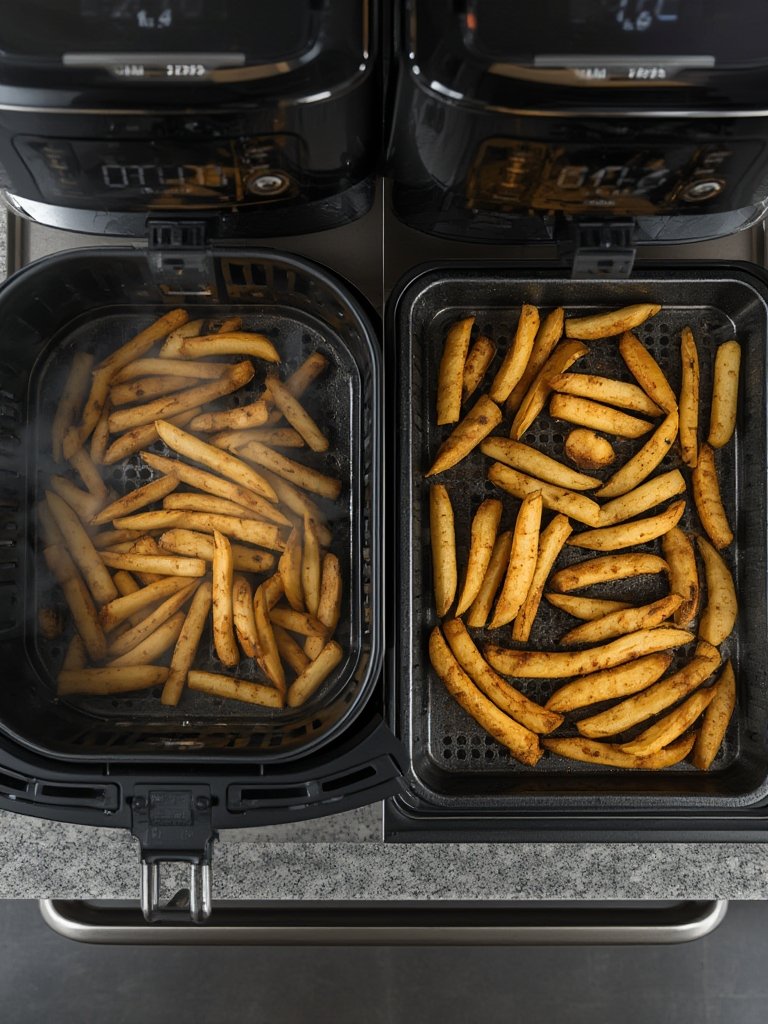
- Solo/couples, 3–7 small meals/week: Air fryer models like the Chefman TurboFry® Touch Air Fryer XL or Vortex 6QT XL work best. Estimated savings: $15–25/month minimum on energy bills.
- Families (meals for 4+ daily): Consider a large air fryer oven (see Emeril Lagasse Extra Large XL Combo) or standard oven for big-batch ease.
- Entertainers/weekly large-batch cooks: Oven almost always wins for big, slow roasts or 4+ trays.
To maximize efficiency: Avoid back-to-back air fryer runs when possible, skip oven preheat for certain foods, and make sure to match air fryer volumes to your typical batch. If you need a new appliance, check for smart timers, insulation scores, and energy certifications—see the next section for buying tips.
Buying guide 2026 — specs to look for and model shortlist (what to prioritize)
What do smart cooks look for in a 2026 air fryer or oven?
- Wattage: Choose air fryers between 1,200–1,800W for quick heating. For ovens, 2,000–5,000W is standard.
- Usable capacity (QT/L): Buy the model that fits your typical dinner size in a single session. Families should look at 8QT and up—see Ninja Air Fryer 10QT DoubleStack XL for a two-zone option.
- Insulation/duty-cycle: If available, check for insulation ratings or reported % of element “on” time—a lower duty cycle saves more in long runs.
- Smart sensors/timers: These reduce over-cooking energy waste, especially on models like the Chefman and Vortex lines.
- Energy-saving modes: Newer 2026 models often let you adjust power levels for lighter/extended cooks.
For countertop blenders and other efficient meal-prep tools, check our Ninja Professional Blender 1000W review.
Sources, methodology notes, and further research the writer should do
This guide used real-world test reports, energy-use data, and trusted manufacturer specs available through 2024–2026:
- InfluxData lab test for measured kWh per meal and appliance duty-cycle
- SharkFryer energy cost post for per-meal, per-session data
- MidlifeAccent smart air fryer 2026 review
- 2026 product listings and reviews at Kitchscoop
Research gaps: No authoritative 2026-specific purchase price, warranty/lifespan, or independent lab sensory/nutrition tests were found. Readers are encouraged to double-check manufacturer specs (especially Consumer Reports or primary sources) when making a buying decision. For local carbon emissions, use your regional “grams CO2 per kWh” published by your utility or EPA for the most accurate per-use calculation.
Use the data points above to create a clear, conversational article that prioritizes per-meal kWh and cost comparisons, highlights the 78-minute break-even insight as the central decision factor, and flags the specific research gaps so readers know where assumptions were made.
Conclusion
In summary, small daily meals are where the air fryer wins—three to six times less energy than a typical oven, with far less heat-up and run time. For large batches or long, slow cooking sessions, though, the oven can claw back efficiency. Know your meals, count your minutes, and always check the real-life numbers for your appliance and grid. If you remember only one thing, let it be this: the 78-minute break-even. If you’re cooking for less—go air fryer. If you’re batch-roasting for a crowd, crank up the oven. Ready to cut your bills and cook smarter in 2026? Start tracking your meal energy now and pick the right tool for the job! If you still have questions about air fryer vs traditional Oven which is more energy efficient, check our FAQ below or explore related gear on our site.
FAQ: Air Fryer vs Traditional Oven Energy Efficiency
Is an air fryer always cheaper to run than a traditional oven?
No. Air fryers win for small, short meals and for singles or couples. But if you are cooking large batches (family-sized roasts, party trays) or running back-to-back cycles, ovens may end up costing less per serving.
Does preheating the oven really use that much electricity?
Yes. Standard ovens use about 10–20 minutes and up to 137 Wh just getting to temperature, especially for short cooks. Always plan bigger batches or avoid unnecessary preheat for better efficiency.
What is the real break-even point for energy efficiency between the two?
Data-tested break-even is about 78 minutes of total cooking time. Sessions longer than that? The oven can be more efficient. For anything shorter, the air fryer almost always wins on energy per meal.
Are there health or taste differences between air fried and oven cooked foods?
The research contains no independent tests on taste or nutrition for 2026 models, but air fryers are generally known for crispy finishes on small portions. Large oven roasts or casseroles may come out more evenly, especially for bigger families or gatherings.
How do I choose the best air fryer or oven for my needs in 2026?
Look for models with capacity to cover your usual batch size, check wattage for efficiency, and favor listed insulation or duty cycle specs. For more, see our 2026 product reviews (like the Ninja 10QT DoubleStack XL Air Fryer recommendation).