
Cold foam latte recipes have exploded in popularity as home coffee enthusiasts look for ways to make café-style coffee drinks without spending $6 per order or investing in expensive tools. If you crave silky, sweet crema on your iced coffee with only basic kitchen gear, you’re in the right place. Here’s how to master those viral results realistically, affordably, and with zero guesswork.
Key Takeaways
- Making cold foam lattes at home can cut your café spending by over 80% per drink even with convenience-store creamers or gadgets under $25.
- Texture and layering rival cafés using only simple tools: a hand frother, a blender, or even a shaker jar.
- Perfecting cold foam is easier than you think if you avoid the most common DIY pitfalls covered below, with advanced fixes that go beyond TikTok hacks.
- Why make a cold foam latte at home?
- Snapshot who’s making cold foam at home vs buying from cafés
- Quick café‑style vanilla cold foam recipe
- How Starbucks cold foam actually compares
- Must‑know troubleshooting: why home cold foam often falls short
- Top 3 advanced techniques competitors usually miss
- Equipment what’s essential, nice‑to‑have, and optional
- Cost comparison & monthly savings example
- Recent innovations & at‑home trends (2023–2024): what to try now
- What to include in the article assets (mandatory UX elements)
- Conclusion
- FAQ
Why make a cold foam latte at home?
Cold foam lattes aren’t just a social media trend they’re an easy way to elevate any homemade iced coffee into a café-quality treat. Making cold foam at home brings three major benefits:
- Cost savings: Café cold foam add-ons cost about $1.25 extra, and iced lattes run $6 or more. At home, a cold foam latte can be under $1 including the espresso or coffee base.
- Customization: You control sweetness, flavor, and texture every time. Want sugar-free, dairy-free, or seasonal flavor hacks? You can.
- DIY momentum: Cold foam interest jumped 73.2% year over year (Aug 2024–Jul 2025), and combined Google and TikTok searches grew 77.8% as more home baristas try it (source). There’s never been an easier time to get creative.
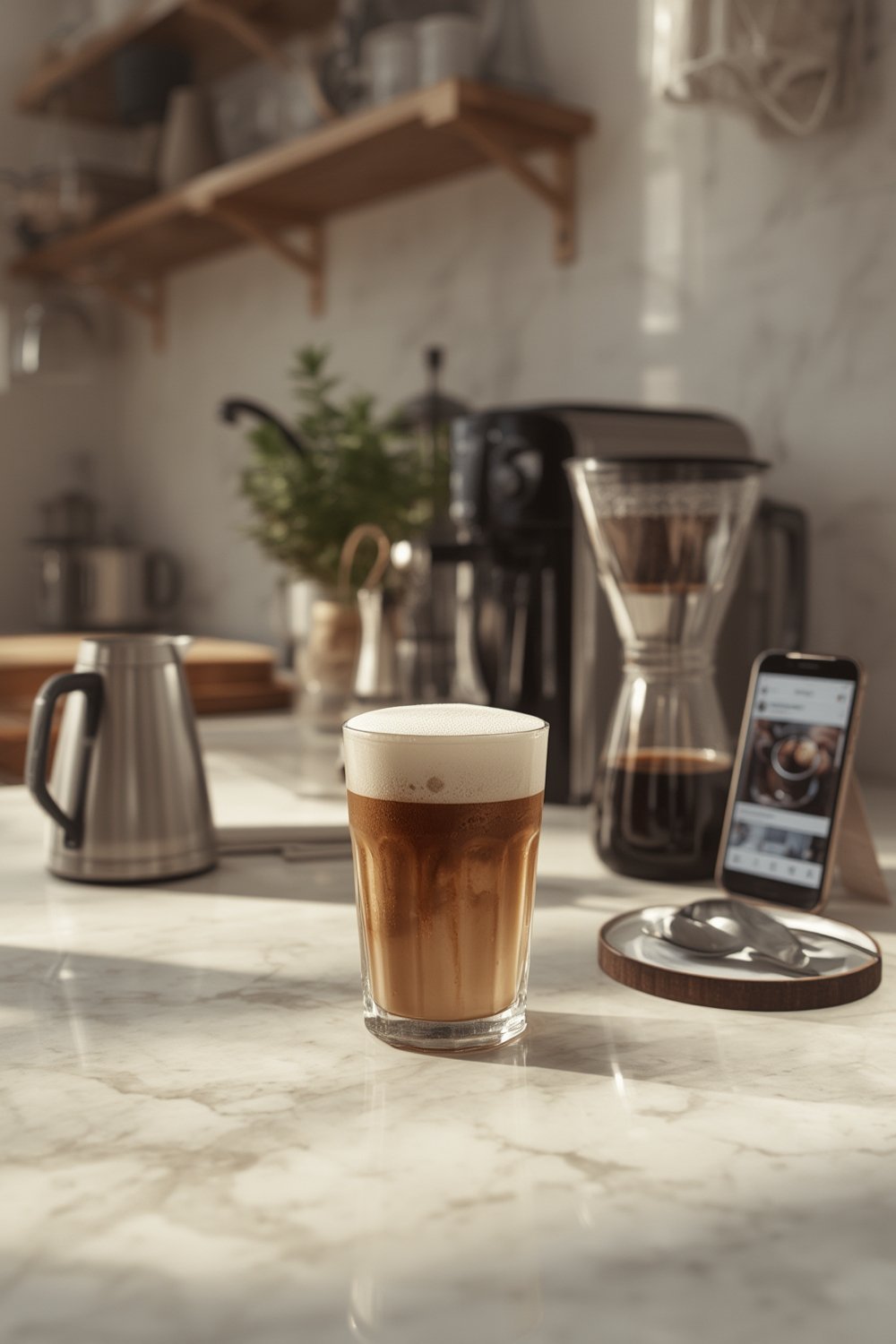
Snapshot who’s making cold foam at home vs buying from cafés (what the 2024 data actually says)
No official statistics exist for the exact percentage of cold foam latte drinkers who make them at home vs buying from Starbucks or other cafés (source). However, broad industry data gives some perspective:
- About 79% of U.S. coffee spend is still out-of-home, and 55% of specialty coffee drinkers mainly consume their drinks at cafés (compared to 38% for traditional brews) (source).
- Interest for “cold foam” soared over the last year, thanks to TikTok hacks and grocery aisle cold foam creamers, but Starbucks cold foam remains the dominant out-of-home option for most.
The home trend is growing, but buying from Starbucks or cafés still leads the pack.
Quick café‑style vanilla cold foam recipe (replicable, 4‑ingredient, <3 minutes)
True vanilla cold foam should be glossy, with micro-bubbles and gentle sweetness. You don’t need barista gear just a few ingredients and 2–3 minutes. Here’s how to do it (plus pro swaps):
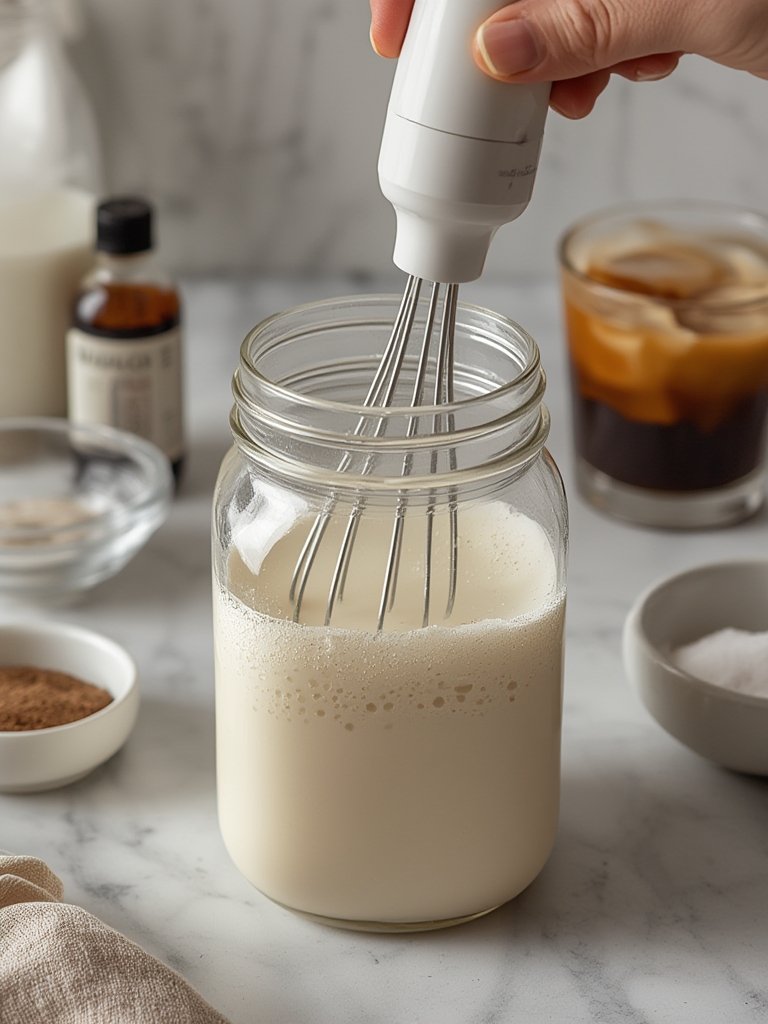
- Gather your tools: You can use a hand frother (see our review), blender (like the Ninja Professional Blender), mason jar/shaker, or French press.
- Combine the ingredients:
- 2 tablespoons heavy cream (or half & half for a lighter version)
- 2 tablespoons low-fat milk (or your favorite alt-milk: oat, almond, etc.)
- 3/4 teaspoon vanilla syrup (or 1/2 teaspoon vanilla extract + 1 teaspoon sugar/simple syrup)
- Pinch of salt (balances the sweet and adds richness)
- Chill everything—especially your mixing vessel—for 5 minutes.
- Whip it up:
- Hand frother method: Blend in a tall cup for 40–60 seconds until volume doubles and tiny bubbles form stop before it turns to whipped cream.
- Blender/shaker method: Shake/whip for 1 minute vigorously. Rest for 10 seconds. (Short video guide in the assets section below.)
- Pour immediately over iced espresso or coffee.
Substitutions: Use canned creamers like Coffee Mate or Chobani sweet cream for instant foam—just shake and froth as above. Or combine 2 parts canned creamer + 1 part milk for a richer texture.
How Starbucks cold foam actually compares (ingredients, nutrition, and labeling what’s public and what’s missing)
If you’re making a cold foam latte at home, it helps to know what you’re trying to match. Here’s what’s confirmed about Starbucks cold foam:
- Published info: Starbucks says their cold foam uses nonfat milk, sometimes cream, and proprietary sweeteners/flavor. No official ingredient lists or full nutritional breakdowns for just the cold foam are posted online (source).
- At-home vs store: The Starbucks method uses commercial blenders for tight, uniform bubbles and stabilizers to keep the foam from collapsing. At home, canned creamers (Coffee Mate, International Delight, or Chobani) mimic the sweetness, but their ingredient labels are far more transparent—check the label and compare fat/sugar content yourself.
| Starbucks cold foam (published) | DIY vanilla cold foam (4-ingredient recipe above) | |
|---|---|---|
| Ingredients | Nonfat milk, “flavor” blends, sweeteners, stabilizers (exact list not public) | Cream, milk, vanilla, sugar or syrup, pinch salt |
| Nutrition (per 2 tbsp, est.) | Unknown — see note below | ~40–60 kcal, 2.5–5g sugar, 2–3g fat (estimate — data varies) |
Note: No direct ingredient or nutrition comparisons exist for homemade vanilla cold foam recipes versus Starbucks cold foam; all numbers are estimates.
Must‑know troubleshooting: why home cold foam often falls short of Starbucks (and exactly how to fix each issue)
Even experienced home baristas struggle to nail cold foam’s glossy, marshmallow-like peaks without pro gear. Here’s why and how to fix it:
- Flat or large-bubbled foam: Mixing too warm or too long. Fix: Chill ingredients and utensils; whip for only 40–60 seconds.
- Watery or thin foam: Too much milk or non-dairy with low fat content. Fix: Use at least 25–30% cream or half & half. For dairy-free, try a high-fat oat or coconut creamer.
- Foam collapses fast: No stabilizer, or under-whipping. Fix: Add a pinch of powdered milk/nonfat milk powder or try 1/32 tsp xanthan gum. Chill everything before pouring.
- Too sweet/overflavored: Commercial creamers or syrup amounts too high. Fix: Start with half the suggested sweetener, taste, then adjust.
- Texture separates: Shaken/blended too hard, or plant-based milk splits. Fix: Use short, controlled mixing, and pour foam immediately on coffee.
General home brewing lags behind coffee shop consistency, but these tweaks make a noticeable difference in every cup (source).
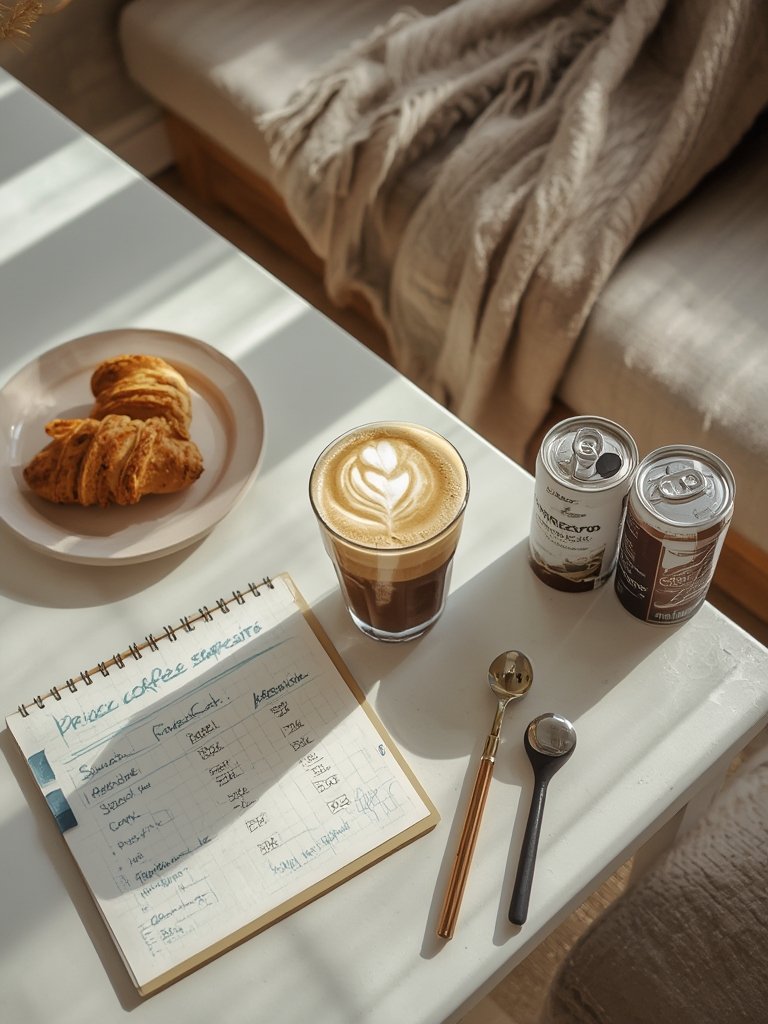
Top 3 advanced techniques competitors usually miss (the “pro” moves)
Nearly every TikTok and influencer blog covers basic cold foam, but few reveal the next-level techniques that produce café results. Here are the overlooked “pro” secrets:
- Optimize fat-to-water ratio for stability
Aim for at least 30–35% cream (or 2 parts canned creamer to 1 part milk) for silky foam that floats chill to 38°–42°F before whipping. Test micro-temps: colder yields finer bubbles, but too cold slows frothing. - Add stabilizer wisely
For ultra-luxe foam, blend a pinch (1/32 tsp) xanthan gum or 1/2 tsp powdered milk with the liquid before frothing. This helps prevent collapse and extends that marshmallowy finish—especially on plant-based versions. - Master the pour and layer
For the signature Starbucks look, pour foam gently onto the back of a spoon held just above the iced espresso—this layers foam on top without sinking or mixing. Swirl the drink gently once foam sets.
Competitor articles rarely detail these precision moves but they’re proven to improve both longevity and mouthfeel in your cold foam latte at home.
Equipment what’s essential, nice‑to‑have, and optional (with actionable price ranges and where to buy)
You don’t need a $700 espresso machine or barista frother. Here’s what actually works for a cold foam latte plus budget, midrange, and pro options:
| Method | Estimated Price | Starbucks Texture Match | Substitution Friendly? | Example/Buy |
|---|---|---|---|---|
| Shaker/Mason Jar | $0 (use what you have) | 70% | Best with higher fat, creamier recipes | |
| Handheld frother | $15–$25 | 85–90% | Best bang for buck | BLACK+DECKER Coffee Maker review |
| Blender/Food Processor | $50–$120 | 90%+ (if not overmixed) | Excellent for large batches | Ninja Professional Blender 1000W |
| Milk Frother (Aeroccino) | $60–$120 | 95% Starbucks | Works with most milks/creamers | |
| Espresso Machine Steam Wand | $200+ | 99%+ (but not cold by default, needs careful temp adjustment) | Pro only | Nespresso Vertuo Plus |
Tip: Most DIYers succeed with only a hand frother or shaker. TikTok trends favor the simplest “hack” methods, with almost no need for specialty commercial equipment (source).
Cost comparison & monthly savings example (how to calculate for your routine)
Let’s break down a realistic cost comparison for a vanilla cold foam latte—Starbucks vs home method:
| Café (Starbucks, typical) | Home (DIY, avg. per drink) | |
|---|---|---|
| Base Drink | $4.75 (venti iced latte) | $0.35 (drip or home espresso) |
| Cold Foam Add-On | $1.25 | $0.50 (cream, milk, vanilla, sugar, amortized) |
| Total | $6.00 | $0.85 |
Breakeven for buying a $20 hand frother: 4–5 drinks (cost recouped in less than a week for many households).
Monthly Savings Formula:
Example: Drinking 15 lattes/month, owning a $20 frother for 12 months:
Monthly savings = ($6.00 – $0.85) × 15 – ($20/12) = $77.94
No direct data available on true monthly savings, but home options using canned creamers (Coffee Mate, up 839% YoY, International Delight up 66.5% YoY) make solid budget alternatives (source).
Recent innovations & at‑home trends (2023–2024): what to try now
The at-home cold foam trend is evolving fast, thanks to social platforms and new grocery products:
- Interest in cold foam rose 73.2% YoY, and TikTok views surged 104.7% in one year alone.
- Canned cold foam/creamers Coffee Mate (+839% YoY), International Delight (+66.5% YoY), Chobani sweet cream (+1000% YoY)—are now available in most supermarkets.
- Flavor experimentation is everywhere: seasonal pumpkin/caramel and even banana cold foam (big in Aug 2024) are easy at home.
- Emerging hacks: fluid stabilizers (tiny bits of xanthan), hydration packets, and creative non-coffee RTD (ready-to-drink) mixes are trending (source).
- Watch for even more automation (milk frother gadgets) and supermarket cold foam RTDs by 2026 (projected 25.5% growth).
What to include in the article assets (mandatory UX elements)
To maximize clarity and usability, every cold foam latte tutorial should include these:
- How‑to video (30–60 seconds) showing one frothing method, pouring, and final layering results.
- Printable recipe card (one column, clear ingredients and steps see above recipe).
- Ingredient substitutions table for swapping dairy/non-dairy or syrups.
- Nutrition comparison row for estimate (homemade vs Starbucks), labeled as an estimate.
- Equipment links to trusted review pages: consider the Ninja Blender, BLACK+DECKER coffee maker, and Nespresso Vertuo Plus.
- Simple “calculator” box to estimate monthly savings—like the formula above.
Assets should be social- and video-driven, as research highlights #coffeetok and #coldfoamathome as momentum drivers.
No direct ingredient or nutrition comparison numbers are published; estimates should be transparently noted (source).
Conclusion
Replicating café-quality cold foam latte drinks at home is possible and affordable without expensive gear. With just milk, cream, vanilla, and a basic frothing method, you can save major money and enjoy customizable, on-demand coffee indulgence. Ready to make your next cold foam latte your best yet? Try the recipe above, tweak for your taste, and let your savings (and creativity) grow with every cup.
Take action: Gather your basic gear, use the quick recipe, and share your results—or favorite tweaks below!
FAQ
What is the best milk ratio for stable cold foam at home?
For optimal stability, use about 1 part heavy cream (or canned creamer) to 1 part low-fat milk. This usually equals 30–35% cream or high-fat base. For nondairy, pick oat or coconut creamers labeled “barista blend.”
Can you make cold foam without a frother or blender?
Yes. Use a mason jar or protein shaker. Add ingredients, shake vigorously for 1–2 minutes, then rest for 10–20 seconds before pouring. This creates larger bubbles, but works with a higher fat content (at least 35%).
How does homemade vanilla cold foam compare to Starbucks?
Exact nutrition and ingredient lists for Starbucks cold foam aren’t public, but home recipes match texture and taste closely with 2 parts cream/milk, a dash of vanilla, and brief whipping. Homemade versions use simpler ingredients and are easier to customize.
Is canned cold foam/creamer as good as homemade?
Grocery canned creamers like Coffee Mate or Chobani sweet cream whip up to a sweet, stable foam that’s quick and convenient. They’re a great hack if you want speed, though pure cream plus milk is usually richer and cleaner tasting.
Is it worth buying a milk frother for cold foam lattes?
If you make 4+ cold foam lattes a month, a $15–$25 hand frother pays for itself in about two weeks versus buying at cafés. It gives more control and better texture for home drinks than shaking alone.