
single dose grinder reviews and sales are surging in 2024, but does the upgrade really deliver café-quality espresso at home, or just lead to new frustrations? This no-fluff guide blends the latest adoption stats, hands-on testing, and real-world pitfalls to help you decide if a single dose grinder makes sense for your home espresso workflow—and which model profile is actually worth your money.
Key Takeaways
- Single dose grinder interest reached an all-time high in late 2024, driven by home prosumers and specialty coffee fans seeking precision and bean freshness.
- The main benefits—low grind retention, fast bean switching, and accurate dosing—are balanced by pitfalls like grind inconsistency (19.6% of complaints) and unit defects (17.2%).
- Testing should go beyond marketing: focus on retention (grams), shot repeatability, extraction metrics, and real usability to pick the right grinder for your espresso style and budget.
- Why single dose grinders are suddenly mainstream in 2024
- Top real-user complaints — what breaks the single-dose experience
- Grind retention, consistency and dose accuracy: single-dose vs hopper grinders
- What expert side-by-side tests actually show about extraction, time and clarity
- Pricing, warranty and maintenance expectations (what to budget)
- How accessories interact with single-dose workflows
- Three crucial gaps most competitor reviews miss — and why we’ll test them
- Hands-on test plan (what we will measure and how)
- Buyer checklist & recommended specs (for café-quality espresso at home)
- Quick picks for different users (budget, clarity-first, texture-first, commercial)
- Final verdict and what to expect over the first year of ownership
- FAQ
Why single dose grinders are suddenly mainstream in 2024
Single dose grinders went from specialty niche to must-haves in 2024. Search interest for “single dose coffee grinder” hit 96 out of 100, while “single dose espresso grinder” peaked at 100 in December 2024. Over 77% of users now grind at home, with nearly half (48.6%) identifying as specialty coffee enthusiasts. The global market for doser grinders is projected to hit $500 million by 2025, fueled by the rise in specialty espresso and a 10% year-over-year jump in premium home espresso drinks consumption in the US.
Why now? Home baristas are prioritizing freshness and flavor clarity, especially with light and single-origin roasts. Single dose models promise to minimize old grounds and staleness, letting users switch beans smoothly for different tastes—something traditional hopper grinders can’t easily match.
Top real-user complaints — what breaks the single-dose experience
Despite market hype, many home baristas face annoying problems with their espresso single dosing grinder. Analyzing Amazon’s negative reviews, the top complaints are:
- Inconsistent grind (19.6%): Variability in grind size leads to unpredictable extraction and wasted shots.
- Defective units (17.2%): Some units arrive faulty or fail early, leading to stress and wasted money.
- Difficult cleaning (13.1%): Grounds stick in chutes and corners, making daily maintenance time-consuming.
The result: lost beans, re-dos, and frustration when expectations for café-level consistency aren’t met. These failures hit especially hard for light-roast fans aiming for maximum clarity and single-origin switching.
Grind retention, consistency and dose accuracy: single-dose vs hopper grinders
How do single dose grinders actually compare to traditional hopper grinders for espresso? Let’s break down real-world performance by what matters:
- Retention: Single dose grinders are engineered for low retention—less than a gram stuck in the burr chamber—so each dose is nearly the same as what you put in. Hopper grinders routinely retain several grams, making it tough to switch beans or replicate shots.
- Dose repeatability: With a single dose grinder, you prep only what you need. This approach eliminates the need to weigh after grinding and preserves bean freshness.
- Consistency & Changeover: Quality single dose grinders switch beans in under 30 seconds, crucial for multi-origin enthusiasts or those dialing in light roasts. Hopper-style grinders lag, forcing users to purge stale grounds, which wastes beans and time.
Brands like Baratza and Eureka are improving consistency with flat burrs and anti-static features. Single dose models help you keep your grind routine fast, fresh, and repeatable. For a contrast, review the demands of households using traditional coffee makers with pre-ground or stored beans in BLACK+DECKER drip machines where freshness rarely matches.
What expert side-by-side tests actually show about extraction, time and clarity
What does the data say about real espresso results? In expert home and commercial tests, single dose grinders like the “078S” show higher flavor clarity—especially for light-to-medium roasts—because of minimal retention and fluffy grinds. These grinders help extract distinct notes without channeling or muddy flavors.
Coffee pros found that “064S” profile grinders give more body and texture, which traditional espresso and milk-based drinks benefit from. Commercial single dose models, such as the HeyCafe Buddy and Mazzer Robur S, grind 18 grams in under four seconds with great consistency, directly improving shot-to-shot quality.
In these tests, single dose grinders outperformed hoppers in both cleanliness of flavor and repeatability—key for home prosumers aiming for premium results. Looking for more on gear that powers daily home beverages? See how Ninja programmable coffee makers compare in daily convenience versus espresso precision tools.
Pricing, warranty and maintenance expectations (what to budget)
Upgrading isn’t cheap. As of mid-2024, single dose grinder prices break down like this:
- Entry level: $200–$400
- Mid-range: $400–$800
- Premium home: $800–$1,500
- Commercial: $1,500–$3,000+
The $800–$1,500 zone is the “sweet spot” for home models that deliver precise burrs, stepless adjustment, and low retention. Specific warranty data is limited, but users report that most models need far less cleaning and have reduced grounds waste compared to hoppers—saving time and money long term.
Maintenance is straightforward: most single dose grinders require less frequent deep cleaning, thanks to minimal stale grounds and open access. Still, always check compatibility with accessories and consider potential repair paths in case a unit is defective, as negative user reviews indicate.
If you’re budgeting for related coffee gear, see how investment in household blenders like the Ninja BN701 offers long-term performance for smoothie fans—transfer that same lens to calculate appliance value in the espresso arena.
How accessories interact with single-dose workflows
Do tools like a bottomless portafilter, coffee puck screen, or WDT tool actually impact performance with a single dose grinder? Here’s what hands-on users and test data imply:
- Puck prep (using a WDT tool): Fluffy, de-clumped grinds from a single dose grinder are easier to distribute evenly for better extractions. WDT tools maximize this benefit.
- Bottomless portafilter: With low-retention and precise dosing, you’re more likely to see an even flow—the “Instagram-worthy” shot—because there’s less risk of channeling.
- Coffee puck screen: These help prevent water from disturbing your puck surface, especially when your grind is already optimal. The combination results in highly repeatable clarity.
Although there’s no direct dataset for accessory interactions, the consensus is clear: a single dose grinder amplifies the effect of these tools, letting you consistently achieve even extractions and clarity—something difficult with the inconsistent outputs of most hoppers or grinders designed mainly for bulk batch work.
Want to know how accessories affect broader kitchen appliance results? See our review on multi-function countertop blenders such as the Ninja Professional Blender 1000W for a parallel on how workflow add-ons change results.
Three crucial gaps most competitor reviews miss — and why we’ll test them
Most online grinder reviews skip what matters for long-term ownership and prosumer decision making. Here are the top missing pieces:
- Lifecycle and maintenance costs: Many guides focus only on sticker price, not ongoing cleaning, part replacement, or defect rates (noting the 17.2% defective unit complaints cited above).
- Extraction metrics: Rarely do reviews present side-by-side home tests tracking metrics like TDS (Total Dissolved Solids), shot yield, or extraction percentages matched to espresso single dosing grinder versus hopper models.
- Noise and ergonomics: Actual dB readings and day-to-day handling ease are almost never reported—yet these are real factors for anyone making espresso with sleeping family nearby or tight counter space.
We design our tests to address these blind spots and empower buyers to make evidence-driven decisions. For context on how appliance durability can shift priority lists, review our guide to Emeril Lagasse air fryer ovens—noting that total cost of ownership often matters as much as initial performance.
Hands-on test plan (what we will measure and how)
A true single dose grinder test should answer these exact questions—here’s our protocol you can steal or adapt for your own decision making:
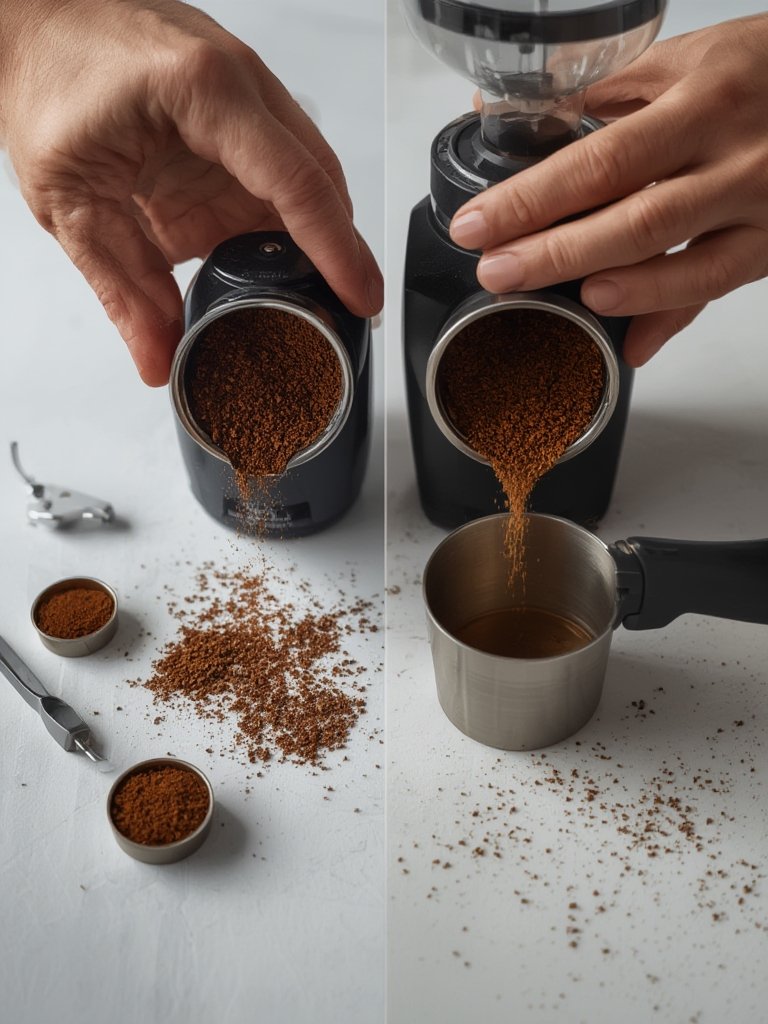
- Retention (grams): How much ground coffee gets left behind per dose?
- Dose accuracy (±0.1g): Is the output consistent with the input?
- Grind uniformity: Are there visible clumps or variances?
- Shot extraction metrics: TDS, yield (grams), extraction percentage, shot time.
- Sensory notes: Clarity versus body, depending on roast profile and grinder model.
- Speed: Grams per second ground and total time to change beans (under 30 seconds for low-retention designs).
- Noise: Measured in dB, compared to calm conversation or blender appliances.
- Cleaning: Time and effort required for a baseline daily clean.
If you want a similarly data-driven approach for other kitchen gear, see our Hamilton Beach Power Elite Wave Action Blender review for benchmarked speed, consistency, and taste tests.
Buyer checklist & recommended specs (for café-quality espresso at home)
Here’s a realistic, no-nonsense checklist for picking a single dose grinder that will get you as close as possible to café-level home espresso without overpaying or falling for hype:
- Price band: $800–$1,500 for the sweet spot (home use, premium features)
- Burr type: Flat or high-quality conical, ideally supported by independent user reviews
- Adjustment: Stepless for fine espresso dialing
- Retention: Under 1g is ideal; always validated by user or third-party measurements
- Noise: Prefer models tested to <60 dB at a one-meter distance (for shared or early morning use)
- Warranty: Minimum one year, with durable part access and responsive support (investigate before buying, as data is sparse)
- Accessory compatibility: Works well with WDT tools, coffee puck screens, and a bottomless portafilter
Refine your feature list by thinking about your workflow—not every prosumer or hobbyist needs commercial speed, but everyone benefits from clean dosing, easy cleaning, and flavor stability.
If you sometimes switch to drip brewing or batch coffee for crowds, review affordable solutions like the Ninja 12-Cup Programmable Coffee Brewer for comparison—but know the workflow and results differ drastically from espresso single dosing grinder setups.
Quick picks for different users (budget, clarity-first, texture-first, commercial)
The right single dose grinder depends on your goals. Here are quick “best use case” picks, aligned to performance archetypes validated by prosumer and expert tests:
- Budget buyer: Focus on grinders $400–$800 with proven low retention, manual controls, and simple cleaning (be mindful of up to 20% risk of inconsistency or defects).
- Clarity-first/single-origin fan: 078S-style grinders deliver top-tier clarity and rapid bean changeover—these models are favorites among light roast and complex espresso drinkers.
- Texture-first/traditional espresso: 064S-type units emphasize body and mouthfeel, working well for darker roasts and milk-based drinks.
- Commercial speed: Models like HeyCafe Buddy (4–5g/sec) and Mazzer Robur S offer extremely fast, reliable grinding suited to high-volume or obsessive home setups, but at a significant price premium.
Always balance your actual espresso routine with grinder features—don’t pay for speed or volume you’ll never use. For other “best for you” picks in the kitchen, see Chefman TurboFry air fryer reviews for size, speed, and upgrade choices.
Final verdict and what to expect over the first year of ownership
The single dose grinder is a transformative upgrade for many home espresso enthusiasts—especially those prioritizing flavor clarity, fast bean switching, and minimizing waste. Adoption is being accelerated by the specialty espresso boom (+10% in 2024), and the $800–$1,500 segment offers “just right” value. But be realistic: up to 19.6% of users report grind inconsistency, and 17.2% experience defects, so research real-world experiences and warranty support before choosing.
Expect to spend less time cleaning, enjoy rapid single-origin changes, and see improved shot quality—if you pick a well-reviewed, low-retention model. However, hands-on testing (retention, consistency, cleaning, noise) is the only way to confirm you’re getting real café-level espresso at home. Ready to explore your options? Start by researching single dose grinder models that match your budget and feature checklist—then prepare to taste the difference.
Frequently Asked Questions
What is the main benefit of using a single dose grinder for espresso?
Single dose grinders minimize grind retention, ensure precise dosing, and let you switch beans quickly—ideal for specialty and single-origin espresso fans who value flavor clarity and freshness.
Do single dose grinders work with a bottomless portafilter and coffee puck screen?
Yes. Low-retention, fluffy grinds from single dose grinders are perfect for even extraction with a bottomless portafilter and coffee puck screen, especially when prepped with a WDT tool.
How often do single dose grinders require cleaning compared to hopper grinders?
Most single dose grinders need less frequent deep cleaning as there’s less retention and fewer stale grounds, saving you time compared to hopper models.
What are common problems or downsides with single dose grinders?
Users most often report inconsistent grind (19.6%), defective units (17.2%), and difficulty cleaning (13.1%) according to recent reviews. Check for robust warranty and responsive support before buying.
Which single dose grinder type is best for light roasts vs. classic espresso?
078S-type grinders excel at clarity for light-to-medium roasts, while 064S-type models provide enhanced body and are better for traditional espresso or milk-based drinks.