

How to clean an airfryer is one of the most important skills for any busy home cook who wants healthy, consistent, and safe meals. If you use your airfryer every week, but don’t have a go-to cleaning routine, you might face stubborn odors, smoke, or even reduce the lifespan of your favorite appliance—without realizing it.
Key Takeaways
- Even top-rated airfryers can develop grease buildup and odors if not cleaned properly—only 7.8% of models are rated top for ease of cleaning (Consumer Reports).
- Neglecting cleaning leads to real hazards: one 2025 study found 19% of airfryer owners experienced smoke, fire, or safety issues linked to poor maintenance (Aviva).
- A short daily routine plus deeper weekly cleaning, using the right tools and safe agents, dramatically extends appliance life and keeps food tasting its best.
- Why cleaning an airfryer properly matters
- Quick daily wipe — a 2-minute routine after every use
- Step-by-step deep clean (weekly or after greasy cooks)
- How to clean different materials and why it matters
- Safe cleaning agents and natural solutions (what to use)
- What to never use (chemicals and tools that damage your airfryer)
- Heating element and interior—how to clean safely (and how often)
- Dishwasher-safe parts — when it’s OK and what to watch for
- Common mistakes that cause damage (and how to avoid them)
- Maintenance schedule & inspection checklist
- Brand notes & manuals — where to find model-specific guidance
- When to replace the basket or seek warranty/repair
- Troubleshooting odors, persistent stains, and burnt-on grease
- Quick reference: printable checklist and safe-cleaning cheat sheet
- FAQ: Airfryer Cleaning Questions Answered
Why cleaning an airfryer properly matters
Cleaning your airfryer after every use is not just for looks. Regular upkeep prevents burnt flavors, lingering odors, and dangerous grease accumulation. Letting grime build up inside your airfryer can actually trigger smoke or, in rare cases, fire. In a 2025 Aviva survey, 19% of airfryer users reported issues directly tied to neglecting basic maintenance—9% had smoke, 9% experienced overheating, and 3% even faced fires or explosions. Most manufacturers warn that crusty oil or food bits on internal components reduce the appliance’s efficiency and lifespan. The result: proper cleaning is about food safety, fire prevention, and protecting your investment for the long haul.
Quick daily wipe — a 2-minute routine after every use
Most airfryer baskets are not top-rated for ease of cleaning; in fact, only about 7.8% of tested models earned the highest scores for easy cleanup (Consumer Reports). That’s why sticking to a simple post-cook routine is key if you want to keep your airfryer in peak condition and prevent the grime buildup that leads to odors and smoke.
- Unplug and let the airfryer cool to room temperature—never start right after cooking.
- Remove the basket and inner tray. If your model uses a single drawer (like the Chefman TurboFry Touch XL), pull out both compartments.
- Dump out crumbs and excess oil. Wipe with a paper towel if needed.
- Use a soft sponge or cloth dampened with warm soapy water to wipe the basket and tray inside and out. Avoid soaking nonstick parts unless doing a deep clean. For stubborn residue on the Ninja DoubleStack or similar models, a non-abrasive brush helps.
- Quickly wipe down the interior cavity and door (if your model has one) with a slightly damp cloth. Avoid letting water drip into vents or electrical sections.
- Dry all parts fully before reassembling. This step prevents mold growth inside the unit and protects electrical components.
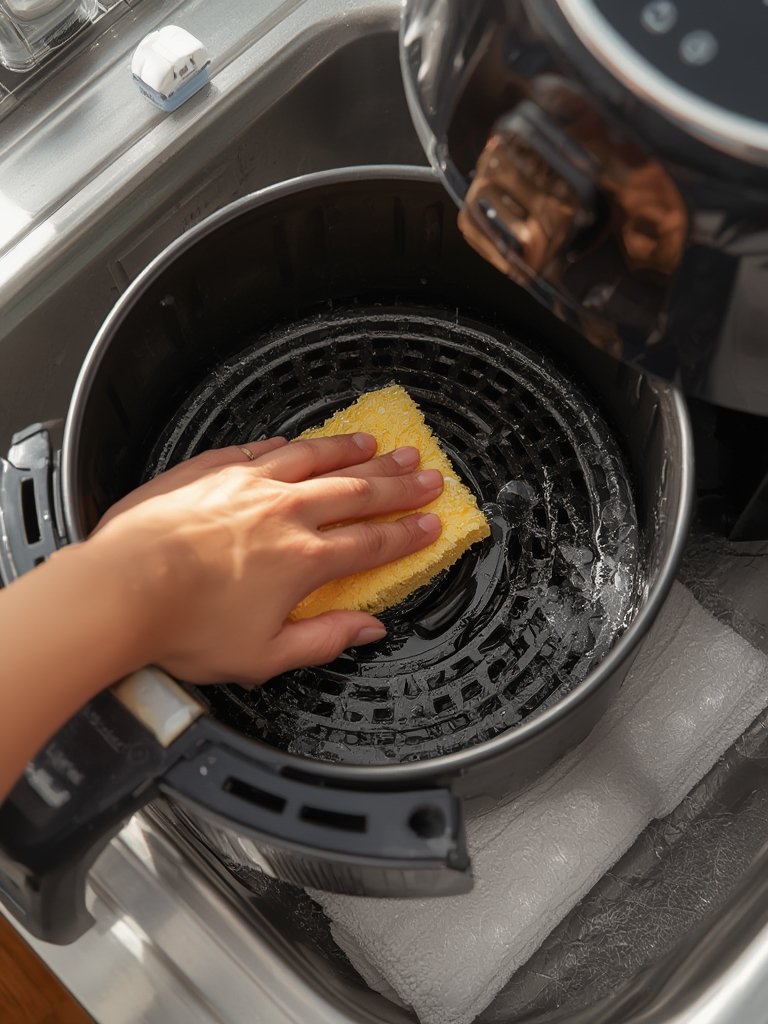
Takeaway: It’s easier to keep your airfryer basket clean (and avoid tough buildup) with these two minutes after each use than to scrub away crusty residue later.
Step-by-step deep clean (weekly or after greasy cooks)
For weekly cleaning—or after especially messy batches—take your airfryer apart for a more thorough scrub. This reduces odors, sticky grease, and keeps performance top-notch.
- Unplug the airfryer and let it cool completely.
- Disassemble removable parts: basket, tray, pan, and any racks or accessories.
- Soak all removable nonstick parts in warm, soapy water for 15-30 minutes. This helps dissolve stubborn grease (per NewAir and Consumer Reports).
- For stuck bits, use a paste of baking soda paste and water—apply gently with a soft cloth or a nylon brush only on tough spots. Avoid scrubbing with anything metal.
- For odors, rub a lemon half on basket surfaces or add a shot of vinegar to your rinse water. (Let sit for 10–15 minutes if needed.)
- Rinse thoroughly and dry every part completely.
- Carefully wipe the heating element (if accessible) with a damp cloth. A soft brush can remove loose debris. Avoid direct sprays or soaks.
- Wipe down the inside of the main housing with a barely damp cloth, keeping clear of the control panel and vent areas.
- Reassemble only when all parts are bone dry.
| Material | Recommended Cleaning Method | What to Avoid |
|---|---|---|
| Nonstick basket/tray | Soft sponge, mild soap, warm water, baking soda paste for stains | Abrasives, metal utensils, oven cleaners |
| Plastic/exterior | Damp cloth, mild detergent | Soaking, excess water, harsh chemicals |
| Heating element | Soft brush, gentle wipedown weekly | Sprays, soaking, scraping tools |
Note: This table reflects real recommendations from Consumer Reports—nonstick surfaces need extra care to avoid scratches and dangerous flaking. Always use gentle tools.
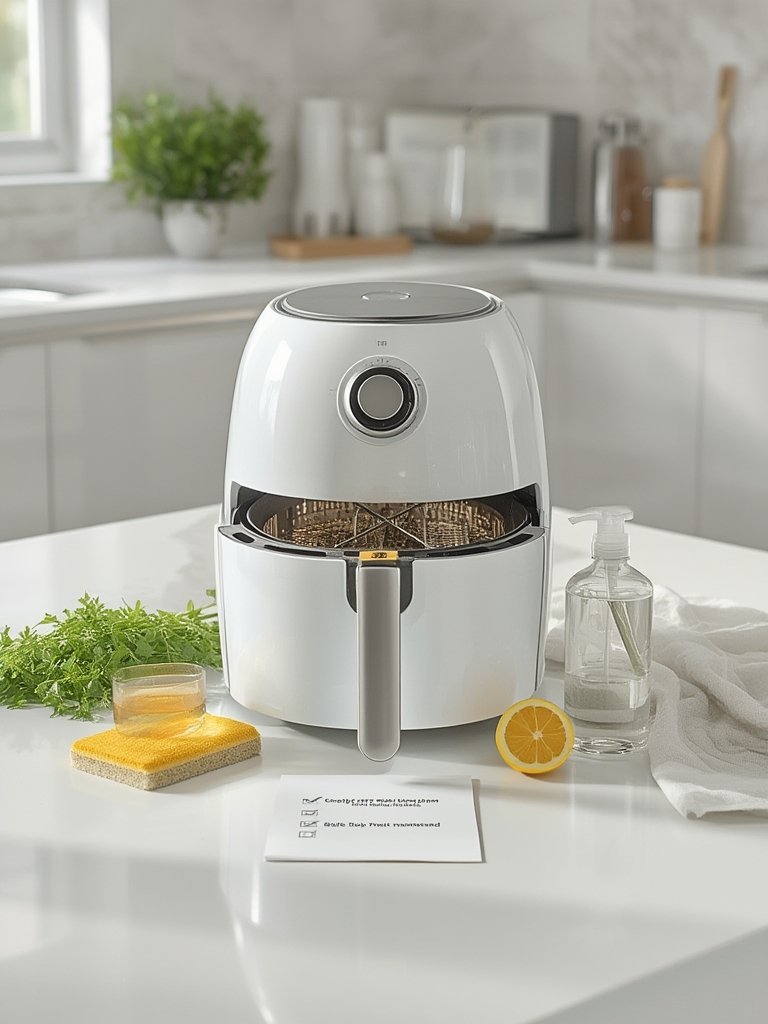
How to clean different materials and why it matters (nonstick, plastics, metal)
If your basket is coated with nonstick material, clean with a soft sponge and mild soap. Never use metal utensils, scouring pads, or harsh chemicals. Scratches aren’t just ugly—they can lead to dangerous flaking and promote bacteria growth. For plastic exteriors, use a damp cloth only; avoid excess wetness to protect the electronics. Metal parts (like racks) are safe with soapy water, but keep an eye out for rust and dry thoroughly before use. If you notice any coating failure (chips, flakes), it’s time to replace the basket for safety reasons. For specific models, check the manual or see the brand notes below for guidance. Consumer Reports documents plenty of user complaints about flaking baskets; so when in doubt, use the gentlest method possible for each part.
Safe cleaning agents and natural solutions (what to use)
You don’t need fancy chemicals. In fact, manufacturers, Consumer Reports, and appliance experts recommend:
- Mild dish soap with warm water for daily and weekly cleaning.
- Baking soda paste for stubborn stains on baskets and trays.
- White vinegar (diluted) or fresh lemon rubbed on parts for odor removal.
All other products—oven cleaners, bleach, strong chemicals—can wreck surfaces or leave toxic residues. If you have persistent stains or lingering odors, try a 30-minute soak with a lemon or a dash of vinegar. These are both safe and effective and are supported by multiple manufacturers.
What to never use (chemicals and tools that damage your airfryer)
- Oven cleaner, bleach, ammonia, or any harsh chemicals—they corrode nonstick and metal alike.
- Steel wool, metal scouring pads, or abrasive tools—they scratch coatings, which can lead to flaking and even fires (as food bits get trapped).
- Metal utensils or scrapers—use only plastic, silicone, or wood.
- Never submerge the main housing (with electronics) in water—this can permanently damage the unit.
These warnings come straight from manufacturer manuals and sources like LearnQ and Times of India, which report user damage caused by using the wrong cleaning agents and methods. When cleaning your airfryer basket, choosing the right tool is essential to preserve your appliance’s life.
Heating element and interior—how to clean safely (and how often)
Check the heating element at least weekly. Unplug and wait for full cool-down. Use a soft brush to dislodge crumbs and wipe any visible grease with a slightly damp cloth. Never spray water directly onto the element or into the airfryer’s cavity; moisture can cause shorts or rust. Neglecting this step leads to smoky smells or, in rare cases, fire (per Aviva fire safety data). If grease persists, a baking soda paste can help. Dry thoroughly before reassembly and first use.
Dishwasher-safe parts — when it’s OK and what to watch for
Many newer models (including 51 out of 64 tested by Consumer Reports) advertise dishwasher-safe baskets and trays. Check your manual: if approved, use the top rack only with mild detergent. However, manufacturers still recommend hand washing nonstick-coated parts like the Instant Pot Vortex basket to slow wear and prevent flaking. When in doubt, gentle hand washing protects the coating and extends appliance life.
Common mistakes that cause damage (and how to avoid them)
Real users (and warranty departments) see the same mistakes over and over. These include:
- Scrubbing with metal pads or abrasive brushes—rapidly destroys the nonstick coating.
- Cleaning the airfryer while it’s hot—risks warping and can cause burns.
- Reassembling parts before they’re dry—traps moisture, causing mold or electrical faults.
- Submerging the main unit or letting water get into the control area—causing permanent electrical damage.
How to avoid: Stick to soft tools, wait for cool-down, dry everything well, and never get the electronics wet. See the cheat sheet section for a simple compliance checklist, and be sure to follow guidance from appliance specialists like Times of India.
Maintenance schedule & inspection checklist (the overlooked “compliance-style” guidance)
This is a commonly missed section in most airfryer guides. A routine schedule preserves your airfryer’s performance and safety:
- After every use: Quick wipe of the basket, tray, and visible interior. Dry parts fully.
- Weekly: Deep clean with soaking, deodorizing, and attention to heating element as described above.
- Monthly: Full inspection—look for nonstick flaking, loose screws, blockages in the vents, and check the power cable. (Problems? Consider manufacturer service.)
Compliance log: If you use your airfryer in a busy household, stick a checklist on your fridge and mark off these steps. Regular inspections are essential not just for safety, but for warranty compliance in some cases.
High-capacity or advanced models (like dual zone air fryers) might have extra trays and baskets—clean each part individually on the same schedule, so nothing gets missed.
Brand notes & manuals — where to find model-specific guidance (and why it matters)
Always check your owner’s manual before using the dishwasher or special tools—different brands like Philips, Ninja, and Cosori don’t have the same recommendations. According to Consumer Reports, even top brands vary on what’s considered dishwasher-safe, and most urge users to avoid any abrasives. If your manual is missing, check the brand’s website or support line for cleaning guidelines (it’s usually listed under FAQs). Sticking to your specific manual prevents accidental damage and helps with warranty claims later.
When to replace the basket or seek warranty/repair
If you notice flakes, chips, or rust on your airfryer basket, stop using it for food—consuming flakes from nonstick coatings is a health hazard. Take photos and contact your manufacturer for a replacement or warranty options. Consumer Reports lists basket flaking as a top user complaint but not a recall issue. Most brands will supply a new basket if still under warranty, or let you purchase a replacement. Never keep cooking with a damaged basket.
Troubleshooting odors, persistent stains, and burnt-on grease
Got mystery smells or residue stuck to your basket? Try these:
- Apply a baking soda paste to stains, let sit for 20 minutes, then wipe gently.
- For odors, soak removable parts in warm water with a few lemon slices or a splash of white vinegar for 30 minutes, then rinse and dry well.
- If burnt-on grease persists, repeat soaking and scrubbing as needed—but never force using a metal tool.
- If stains or odors don’t budge, it could signal hidden buildup behind the element or vent. In that case, contact service or consider upgrading—see our guide to the Emeril Lagasse Extra Large French Door Air Fryer for a high-capacity option.
Quick reference: printable checklist and safe-cleaning cheat sheet
Copy and post this checklist inside a cabinet or on the fridge for easy reference:
- After every use: Wipe basket/tray, check for crumbs, dry fully before reassembly.
- Weekly: Soak removable parts, use baking soda/lemon for tough spots, clean heating element.
- Monthly: Inspect for nonstick flaking, loose parts, blockages, cable damage.
- Never: Use metal scrubbers, abrasive cleaners, or submerge main unit. Wait for cool-down, dry thoroughly before plugging in.
- Smoke/odor emergency: Turn off, unplug, check for grease on element, deep clean before next use.
Remember: proactive cleaning extends your airfryer’s life and keeps food tasting great. Only 7.8% of airfryers are rated easy to clean, so a clear checklist is your easiest defense (source).
Want more appliance care tips? See our guide on how to use a slow cooker safely and efficiently.
Conclusion: Clean now, cook safely later
Keeping your airfryer in top shape isn’t hard, but it makes all the difference for taste, hygiene, and safety. A short daily wipe, a regular deep clean, and the right cleaning supplies all help extend the lifespan of your appliance while avoiding hazards and odors. If you follow these steps on how to clean an airfryer, your meals will stay delicious—and your airfryer will last for years.
Ready to put these tips into practice? Check your manual, print out the checklist, and invest two minutes after every use. If you’re shopping for a new model, see our tested reviews like the Instant Pot Vortex 6QT XL Air Fryer for easy-clean options!
FAQ: Airfryer Cleaning Questions Answered
Can I put my airfryer basket in the dishwasher?
Most brands claim dishwasher-safe baskets—51 of 64 tested by Consumer Reports do—but always check your manual. For nonstick, hand washing prolongs the coating’s life and reduces flaking.
Is vinegar safe for cleaning my airfryer?
Yes. Diluted white vinegar removes odors safely. Soak baskets in a vinegar-water mix or wipe with a cloth dampened with vinegar for tough smells.
Why does my airfryer smoke after cleaning?
If you don’t dry parts completely, leftover water can burn off and create smoke. Also, grease left on the heating element is a common culprit. Always dry thoroughly and check for residue after deep cleans.
How long should my airfryer basket last?
With gentle cleaning, baskets can last for years. Replace if nonstick coating flakes or peels—don’t ignore visible damage. Contact your brand for warranty or replacement info.
What if I still notice odors?
Try baking soda paste, a vinegar soak, or lemon slices for persistent smells. If odors persist after thorough cleaning, hidden grease may need professional service or a basket replacement.
—