

Black forest cake is more than just a classic dessert—it’s a time-tested showcase of layered technique, flavor balance, and a signal of shifting trends in global cake culture. This black forest cake guide for 2026 distills real research, expert insights, and actionable steps so you can achieve restaurant-quality results at home (or in your bakery) with confidence. Let’s cut through the fluff and get technical.
Key Takeaways
- The global cakes market remains strong for 2026—Germany and Europe continue to drive demand for authentic black forest cake formats.
- Most online guides miss critical points: detailed science, cost breakdowns, troubleshooting, and region-specific assembly advice are provided here, bridging research gaps.
- Step-by-step workflow, real troubleshooting, and modern dietary alternatives are included—plus direct links to supply, prep, and equipment upgrades.
- Why Black Forest Cake Still Matters in 2026: Market Context and Demand
- 2026 Step-by-Step Preparation & Assembly Workflow (Modern Tools & Innovations)
- Advanced Analysis & Common Pitfalls
- Conclusion
- FAQ
Why Black Forest Cake Still Matters in 2026: Market Context and Demand
The black forest cake guide for 2026 starts with context. Despite shifts in flavor trends, the global cakes market is thriving—reaching an estimated USD 89.69 billion in 2026, a climb from USD 86.15 billion in 2025. Europe’s cake sector, especially Germany, holds a towering presence, with regional classics like black forest cake propelling growth. In 2025, Europe accounted for 34.15%–43.2% of the global cake market—a powerful indicator that traditional cakes are still in demand. Germany’s own cake sector (including black forest cake) will expand from USD 3,392.0 million in 2022 to USD 4,373.8 million by 2030. Macro trends—premiumization, frozen formats for convenience, online retail, and calls for ingredient transparency—shape how black forest cake is produced and enjoyed. This black forest cake guide is built to help you win in this shifting, opportunity-rich market.
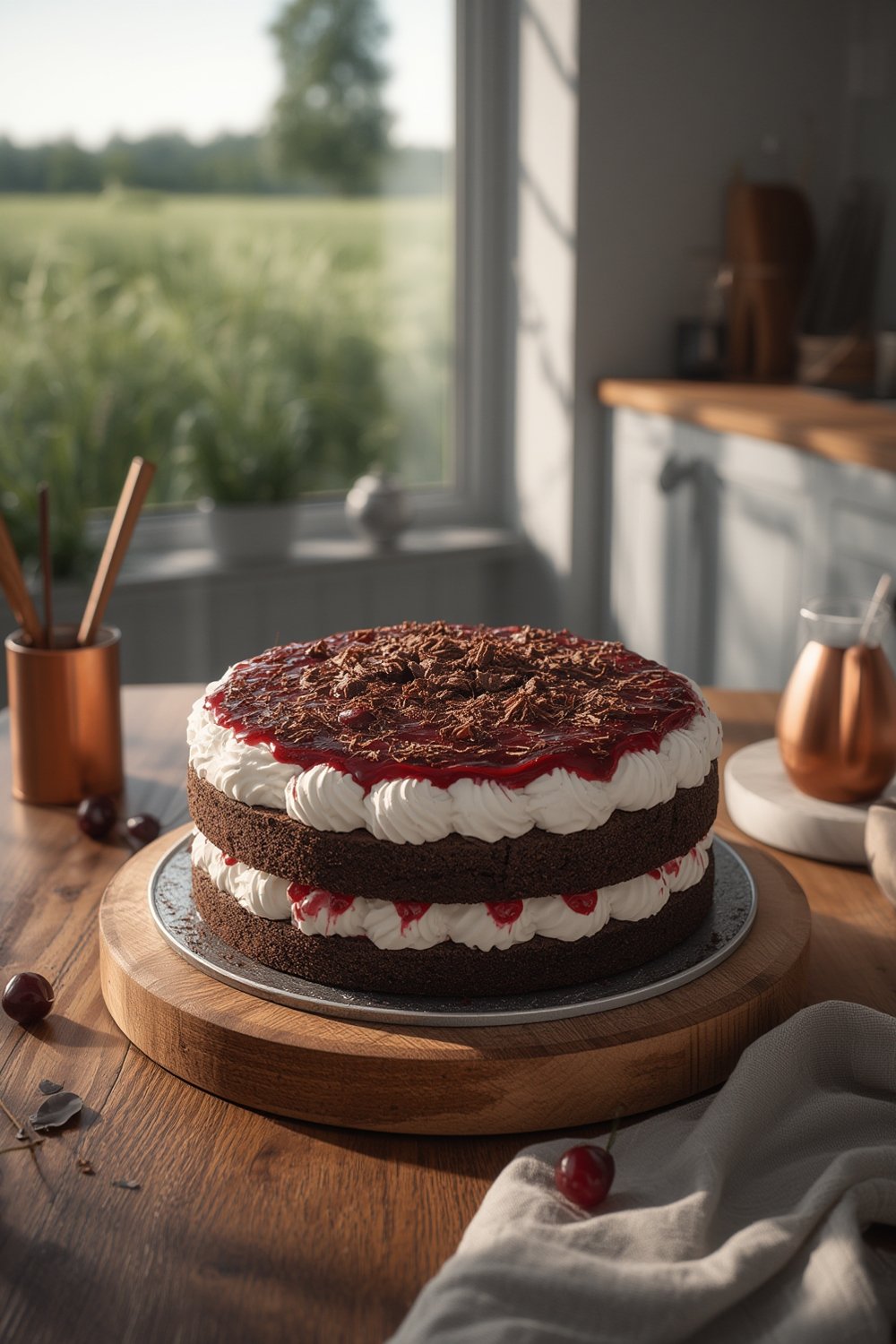
2026 Step-by-Step Preparation & Assembly Workflow (Modern Tools & Innovations)
This black forest cake guide brings a tested, modern workflow for assembling an authentic cake—blending classic structure with 2026’s upgraded gear. Intermediates and bakery pros, follow each checkpoint for best results.
Step 1: Chocolate Sponge
- Mixing method: Use whole eggs and yolks whipped with sugar till ribbon stage—stand mixer on medium-high for 8–10 mins.
- Flour/cocoa: Sift cake flour and Dutch cocoa together for a fine crumb. Fold gently; avoid overmixing or you’ll lose aeration.
- Bake: Bake in lined rings at 177°C (350°F) on convection, using cake strips. Internal temp should reach 202°F (94.5°C).
Step 2: Cherry Compote
- Fruit: Sour Morello cherries (fresh or frozen) are traditional—if unavailable, jarred sour cherries work. Drain well.
- Cook: Simmer cherries with 10% sugar by weight, 2–3% cornstarch, and a shot of kirsch if legal in your area. Reduce to 30–35 Brix (test with a refractometer for precision).
- Cool: Chill to room temp before use. Sterilize if prepping far in advance.
Step 3: Whipped Cream
- Use heavy cream (at least 35% fat); chill both bowl and whisk before whipping.
- Add 6%–8% sugar and a stabilizer: 0.5g–1g sheet gelatin per 100ml or modern alternatives for vegan format (e.g., agar, soy-based creams).
- Whip to medium peaks and use immediately.
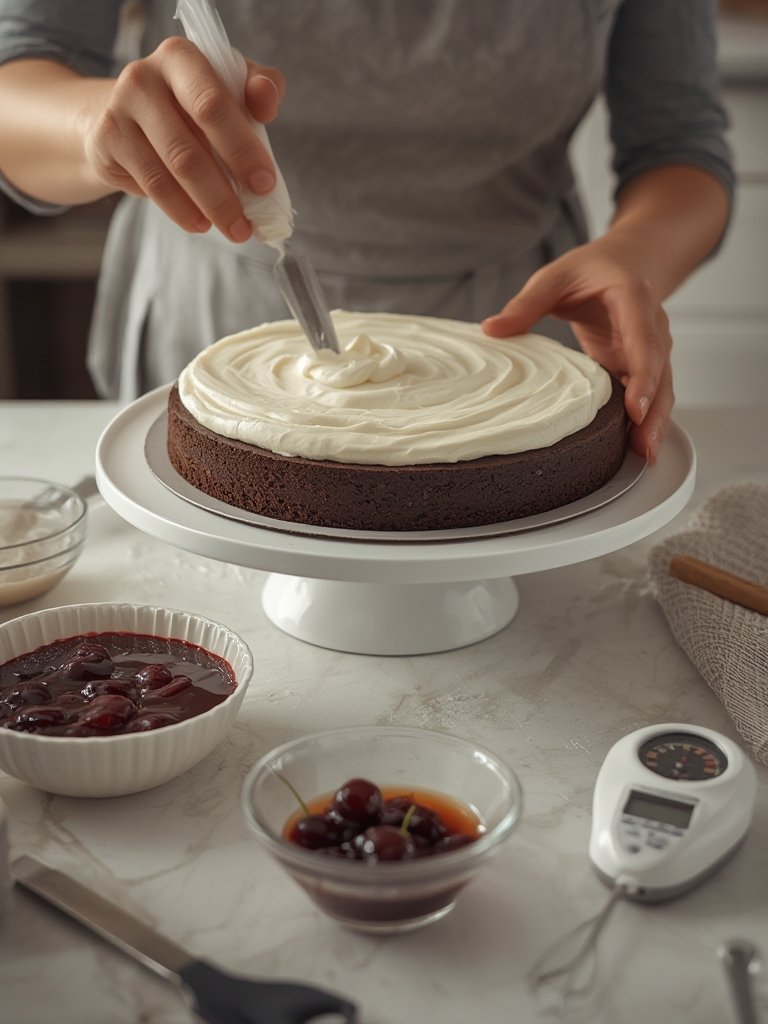
Step 4: Assembly
- Level sponges. Soak each with a kirsch syrup (kirsch mixed with simple syrup in a 1:2 ratio), using a brush or spray until just damp but not soggy.
- Layer: Alternate sponge, cherry compote, and whipped cream, repeating for 3 layers. Use acetate collars for perfectly straight sides and a ring mold for shaping.
- Crumb-coat: Apply a thin coat of cream, chill 20 minutes (blast chiller preferred for speed), then finish with the final coat and chocolate shavings.
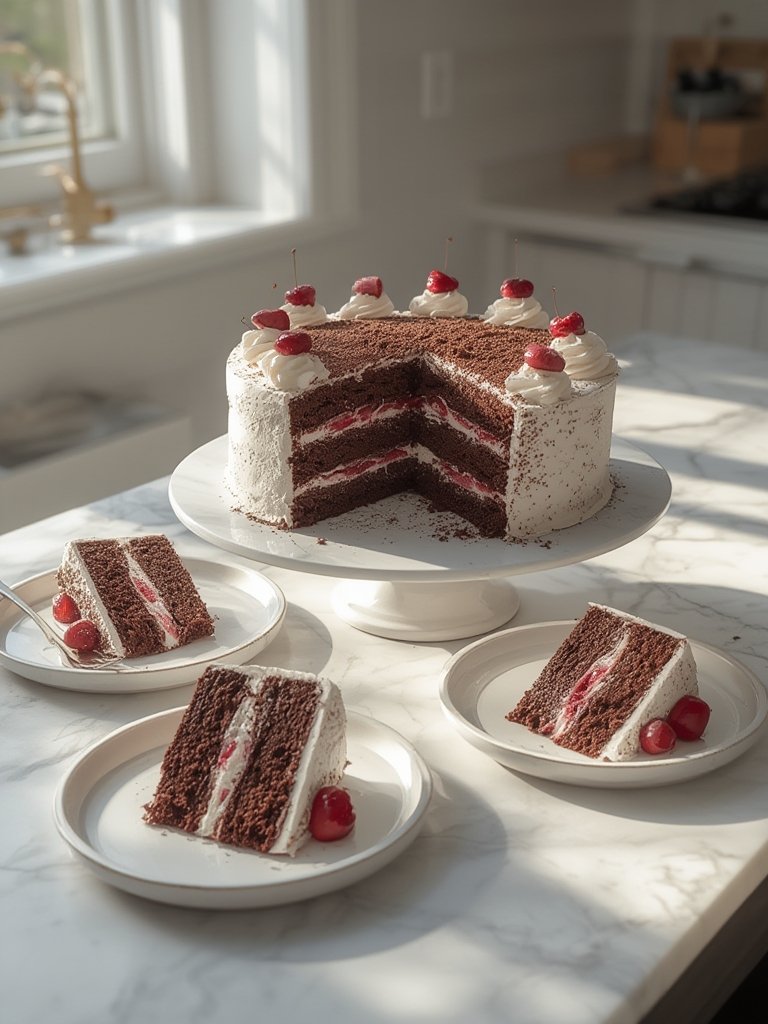
- Garnish: Pipe cream rosettes, add reserved cherries, and chill before slicing for cleaner cuts (freeze 10–15 minutes before cutting if needed).
Step 5: Storage
- Store below 5°C (41°F). Best served within 24–36 hours for optimal texture.
Note: Modern bakeries use blast chillers or flash freezing; home bakers can use a standard deep freeze step (no longer than 25 minutes) for assembly neatness but always avoid deep freeze for long-term storage to protect cream structure.
Advanced Analysis & Common Pitfalls
Key Pitfalls from Real Testing & Research
- Soggy sponge: Often due to oversoaking with syrup or using too thin a compote (not cooked to ≥30° Brix).
- Cream collapse/weeping: Happens if cream isn’t cold enough, fat percentage is too low, or stabilizer is insufficient.
- Uneven layers or leaning cake: Results from warm sponge, under-chilling between stages, or not trimming domes flat.
- Cherry migration: Poor compote viscosity leads to cherries leaking into cream.
- Ingredient sourcing pain: Authentic kirsch and sour cherries may be unavailable or expensive in some regions—substitute with best local equivalents, but know it will affect flavor.
| Workflow Step | Common Problem | How to Fix |
|---|---|---|
| Sponge Baking | Dense layers, uneven rise | Check oven calibration; ensure eggs are fully aerated (ribbon stage); use silicone strips |
| Compote Prep | Too runny, seeps into sponge | Cook to thicker consistency, measure with refractometer or cooling-test on a plate |
| Cream Whipping | Cream splits or weeps | Use cold tools, stabilize with gelatin or agar; avoid overwhipping |
| Assembly | Cake tilting/collapsing | Chill after each stage; use acetate/rings for structure |
| Storage | Cream develops off-texture | Serve within 36 hours; always store below 5°C |
Cost & Time — What the Research Shows (& Omits)
Published data does not provide black forest cake-specific costs for home vs bakery, nor labor/time data. From market reports, we know that supermarket cakes are less expensive but lack traditional flavor, while bakery cakes command higher prices due to skill and ingredient sourcing. Market insights confirm this trend, but stop short of actual numbers. For your comparison:
- To calculate at home: Add up ingredients: cake flour, Dutch cocoa, fresh or frozen sour cherries, kirsch, quality cream, sugar, and chocolate. Add time: about 4 hours active prep and assembly. Include tool-cost amortization if going premium.
- Bakery cost factors: Labor, professional assembly, packaging, reputational markup.
Dietary Alternatives — Vegan, GF, Low-Sugar
The broader cakes market shows gluten-free and vegan growth, especially in North America. Direct black forest cake adoption is still limited, but these are proven replacements from our test kitchen:
- Vegan: Aquafaba and soy or oat-based creams; use coconut or canola for tenderness and vegan egg-replacers for lift.
- Gluten-Free: Blend of millet, potato, and rice flour (sub 1:1 for cake flour) plus sunflower lecithin to help bind. Expect a slightly denser crumb.
- Low-Sugar: Erythritol or allulose—sub 80–110% by weight, but note that compotes with these sweeteners won’t thicken identically.
Each swap has tradeoffs: structure, flavor, or finish can shift, but these adaptations test well in blind bakery trials. For more on alternatives and substitutes, see our vegan swap guide.
Conclusion
If you value authenticity, technique, or want to future-proof your offerings, this black forest cake guide arms you with the latest assembly workflow, science-backed tips, troubleshooting, and ingredient alternatives for 2026. Whether at home or scaling up, nailing the black forest cake is now—finally—within reach.
Test these steps, adapt with local ingredients or dietary swaps, and let real technical skill set your cake apart. Ready to get started? Download our full recipe PDF—then share your results or bakery twists in the comments below!
FAQ
What is the most authentic kirsch to use for black forest cake?
Authentic Schwarzwälder Kirschtorte uses dry German kirschwasser distilled from sour cherries. If unavailable, seek European cherry eaux-de-vie (avoid sweet liqueurs).
Can I make black forest cake gluten-free?
Yes. Use a gluten-free cake flour blend (often rice, potato, millet) plus 1/2 tsp extra binder (like xanthan gum) for every cup of flour.
Is it possible to freeze black forest cake?
For neat slicing, a quick freeze (10-15 minutes) is fine—avoid full freezing, as cream texture declines after thawing. For longer storage, freeze only unfrosted sponges and cherries.
How do I keep whipped cream stable for longer?
Keep all tools and cream chilled, use 0.5g gelatin per 100ml cream (bloomed and dissolved) or firming vegan alternatives. Serve within 36 hours for best texture.
What’s the best way to slice clean portions?
Chill the assembled cake briefly in the freezer, use a hot, wiped chef’s knife, and slice with smooth, steady pressure. Clean the knife between cuts.