

How to descale a coffee maker properly is the single most important routine in coffee appliance care if you want to avoid flavor loss, reduce breakdowns, and protect the investment you use every day. Without routine attention, minerals quietly build up inside your coffee maker, leading to surprisingly common – and fully preventable – taste and performance issues.
Key Takeaways
- Descaling removes unseen mineral buildup that impacts taste and can lead to avoidable machine failures.
- How often you descale depends on water hardness, machine type, and usage—there’s no one rule for every household.
- Step-by-step guidance and a realistic maintenance schedule save money, reduce hassle, and keep your coffee amazing.
- Why Descaling Matters
- How to Descale a Coffee Maker Properly: Step-by-Step Guide
- Advanced Analysis & Common Pitfalls
- Conclusion
- FAQ
Why Descaling Matters
Every time you brew coffee, minerals like calcium and magnesium from your water settle in the machine’s internal parts. This is called limescale or scale buildup. Left unchecked, scale doesn’t just slow down water flow and cause odd noises—it can rob your brew of its rich flavor and cause hidden wear inside the machine’s pump or heating element. Data shows that regular descaling preserves the taste of your coffee and keeps your machine operating reliably, preventing many performance issues and expensive damage down the line [source].
Routine care and cleaning are especially critical if you live in a hard water area or brew daily.
How to Descale a Coffee Maker Properly: Step-by-Step Guide
Read this before you start: Always unplug your coffee maker and check the manual for any manufacturer warnings or special descaling instructions. The following steps apply to most home machines, but adjust as needed if your user manual specifies otherwise.
Universal Descaling Protocol
- Prepare Your Machine: Empty and clean the carafe and filter basket. Remove any old filters or coffee pods.
- Choose Your descaling solution: Use a manufacturer-approved descaler, citric acid tablet, or (if your manual allows) a vinegar solution (1:1 ratio of distilled white vinegar and water). Pre-mixed products can be found at most supermarkets or online.
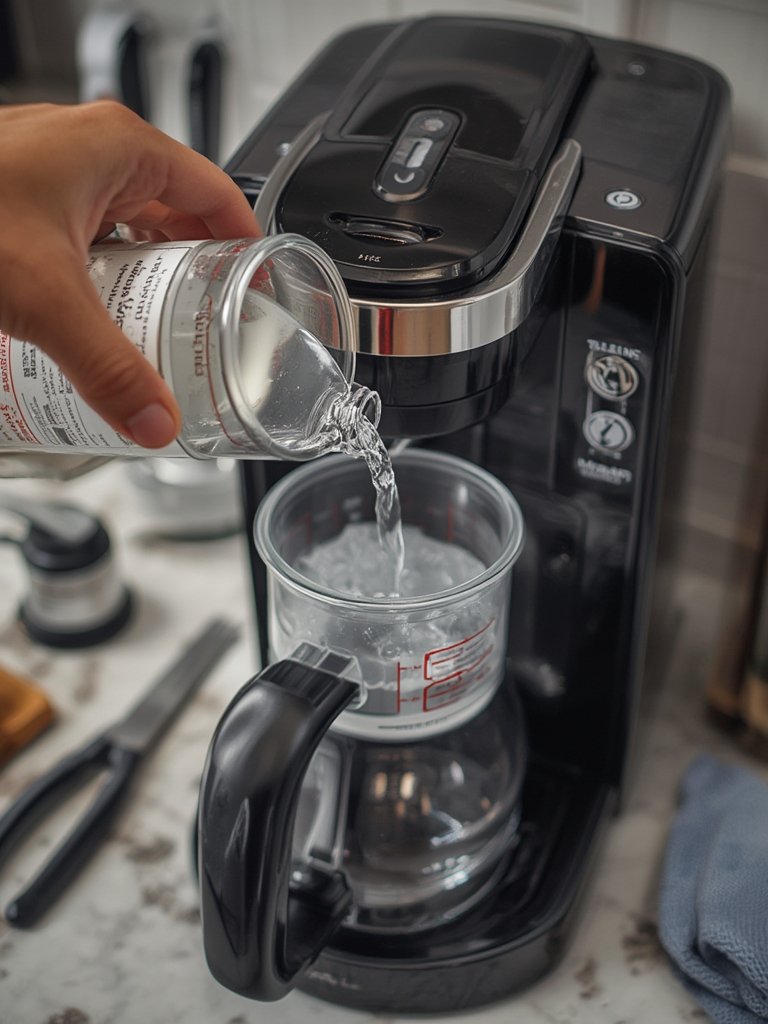
- Mix & Add Solution: Pour the descaling solution into the water reservoir to the “MAX” fill line.
- Run Descaling Cycle: Start a brew cycle as if making coffee, but with no grounds/capsules. For single-serve, run as multiple small cycles. For espresso, activate the pump for a steady stream, and pass descaler through both group head and steam wand if possible.
- Let Soak: Halfway through, pause the brew and let the solution sit for 15–30 minutes if heavy scale is suspected.
- Flush & Rinse Thoroughly: Once the entire solution has cycled through, discard the contents. Fill reservoir with fresh water and run 2–3 complete brew cycles with just water to rinse out all residues. Clean removable parts before reassembling.
- Verify: Check for lingering odors, chalky residue in carafe or cup, and normal brew speed. Repeat rinse if needed.
Quick Customization by Machine Type
- Drip Coffee Makers: Clean the carafe and basket afterward. Inspect the spray head for visible scale.
- Single-Serve/Pod: Run multiple mini-cycles, and don’t forget to descale the piercing needle or pod holder area per manual.
- Espresso Machines: Pass descaler through both the group head/portafilter and separately through the steam wand. Backflush, if required by your model.
Frequency Guidelines
- Soft Water, Light Use: Every 3–6 months.
- Moderate Hardness/Use: Every 2–3 months.
- Hard Water, Daily Use: Every month or even every 40–60 brew cycles.
Always check your manual for any machine-specific scheduling. Many high-end models like the Nespresso Vertuo Plus will provide descaling alerts or specific maintenance instructions.
Routine descaling is a simple habit. It will dramatically improve coffee taste and avoid many costly repairs over time, as confirmed by multiple market reports.
Advanced Analysis & Common Pitfalls
It’s easy to get lost in conflicting advice about how to descale a coffee maker properly, especially when researching universal solutions and troubleshooting real-world problems. Manufacturers often provide vague or incomplete instructions—and there’s little independent research about what really causes user frustration. However, you can sidestep common issues with awareness and the right workflow.
Typical Problems and Pitfalls
| Issue | Why It Happens | How To Fix or Prevent |
|---|---|---|
| Descaling residue smell/taste | Inadequate rinsing or overly strong solution | Always run at least two full rinses with fresh water after descaling |
| Slow water flow or blocked lines | Heavy scale not fully dissolved during cycle | Try a second descaling round and increase soak time (as noted in guide) |
| Uncertainty about which cleaner to use | Manual is unclear or missing | Default to a commercial citric-acid based product when in doubt |
| Forgotten schedules, missed cycles | No physical reminder or confusion about timing | Set digital calendar reminders or use a printed checklist (see below) |
| Warranty concerns | Worried that homemade or unapproved solutions could void coverage | Stick with solutions branded “for coffee makers” unless manual allows vinegar/citric acid |
What If Descaling Doesn’t Fix It?
- Persistent blockages, strange noises, or inconsistent brews after full descaling and flushing may mean hardened scale, pump wear, or valve issues.
- Consider professional servicing, especially for higher-end models or older machines.
- You can search for replacement carafes, filters, or parts—like those for the BLACK+DECKER 12-Cup Coffee Maker or Ninja 12-Cup Programmable Coffee Brewer.
If in doubt, consult a technician before attempting complex repairs. While market data doesn’t tie a specific percentage of failures directly to neglected descaling [reference], regular preventive maintenance remains your safest bet for long-term machine health.
For a deeper dive into coffee maker reliability, see our review of versatile kitchen appliances like the Ninja Professional Blender 1000W or the Emeril Lagasse Air Fryer Toaster Oven Combo—well-maintained gear in any category saves time and money.
Conclusion
If you want your daily cup to taste great, your coffee gear to last, and to minimize breakdowns without wasting money, routine descaling is non-negotiable. Armed with this guide on how to descale a coffee maker properly, you now have a step-by-step protocol, practical troubleshooting, and clear schedules—backed by market research and accessible to everyone. Start your maintenance routine today and notice the difference in flavor and reliability.
Ready to put this into action? Download and print the quick checklist below, set up a calendar reminder, and keep your coffee at its best.
FAQ — How to Descale a Coffee Maker Properly
Can I use vinegar to descale my coffee maker?
Most basic drip and pod machines tolerate household vinegar (1:1 with water), but always check your manual—some manufacturers warn it can damage seals or void your warranty. Commercial descalers are safest for sensitive models.
How long does the entire descaling process take?
Typically 30–60 minutes, including soak time and two full rinses. Some home espresso or single-serve machines may take less. Always factor in extra cycles if odors remain after rinsing.
Will descaling void my coffee maker’s warranty?
No manufacturer-specific recommendations were provided in the research results; always check your machine’s manual. Stick to branded or approved descalers unless your manual says vinegar or citric acid is safe.
What are the signs I need to descale ASAP?
Slower brewing, odd noises, reduced coffee temperature, chalky taste, or a visible descaling light—all mean it’s time to act. For faster fixes, see the troubleshooting table above.
When should I contact a repair technician instead of DIY?
If the machine remains blocked or noisy after multiple descaling and rinse cycles—or if there are leaks or error lights that won’t clear—call a technician. Professional service may be needed to replace valves or deep-clean stubborn mineral deposits.
—