
Philips vs cosori air fryer: which should you buy? If you’re preparing to invest in a new air fryer in 2026, choosing between Philips and Cosori isn’t easy. Both brands grab headlines and dominate kitchen wish lists, but the real question is which is better for your needs—and why. This practical guide unpacks the data, reveals what’s actually known (and unknown), and delivers a clear, bias-free buying roadmap for small families and everyday home cooks.
Key Takeaways
- Philips is the global market leader with a 15% share, prioritizing innovation and high build quality, while Cosori consistently ranks top for affordability and e-commerce success with models selling around 20,000 units monthly on Amazon.
- No independent 2026 model test data is available; buyers should scrutinize capacity, smart features, and long-term serviceability before making a purchase.
- Accessory compatibility, energy efficiency over time, and warranty claim rates are underreported—check manufacturer spec sheets and trusted reviewer tests for details.
- Quick verdict — Philips vs Cosori air fryer: which should you buy?
- Market snapshot — who’s winning and why it matters
- What we know (and don’t) about 2026 models — specs and smart features
- Side-by-side feature comparison (what to look at)
- Price and long-term value — what the data shows and where gaps remain
- Real-world complaints — durability, cleaning, and cooking performance
- How Philips and Cosori perform in independent cooking tests (what the evidence says)
- Warranty, returns, and customer support — buyer risk factors
- Accessory ecosystem and compatibility — small things that affect daily use
- Undercovered investigative angles — what competitors missed
- Methodology — how we checked sources and where readers can verify
- Final buying checklist — what to confirm before you hit buy
- FAQ
Quick verdict — Philips vs Cosori air fryer: which should you buy?
Here’s the short answer: Philips wins on reputation, innovation, and market leadership (holding 15% of global share in 2024 per Credence Research), while Cosori tops online best-seller lists for affordability and consistent sales traction (around 20,000 units/month for the COSORI Air Fryer on Amazon).
- Budget shopper: Cosori is hard to beat for under $100, especially if you want a full-featured model validated by high sales and strong user engagement.
- Tech/smart-home buyer: Cosori’s Pro II Smart models feature app and voice control (VeSync integration), far outpacing Philips in consumer-available smart features right now.
- Durability-first buyer: Philips is best positioned as a market innovator trusted globally, but real-world warranty and repair data for either brand remains unclear—double-check support options pre-purchase.
Market snapshot — who’s winning and why it matters
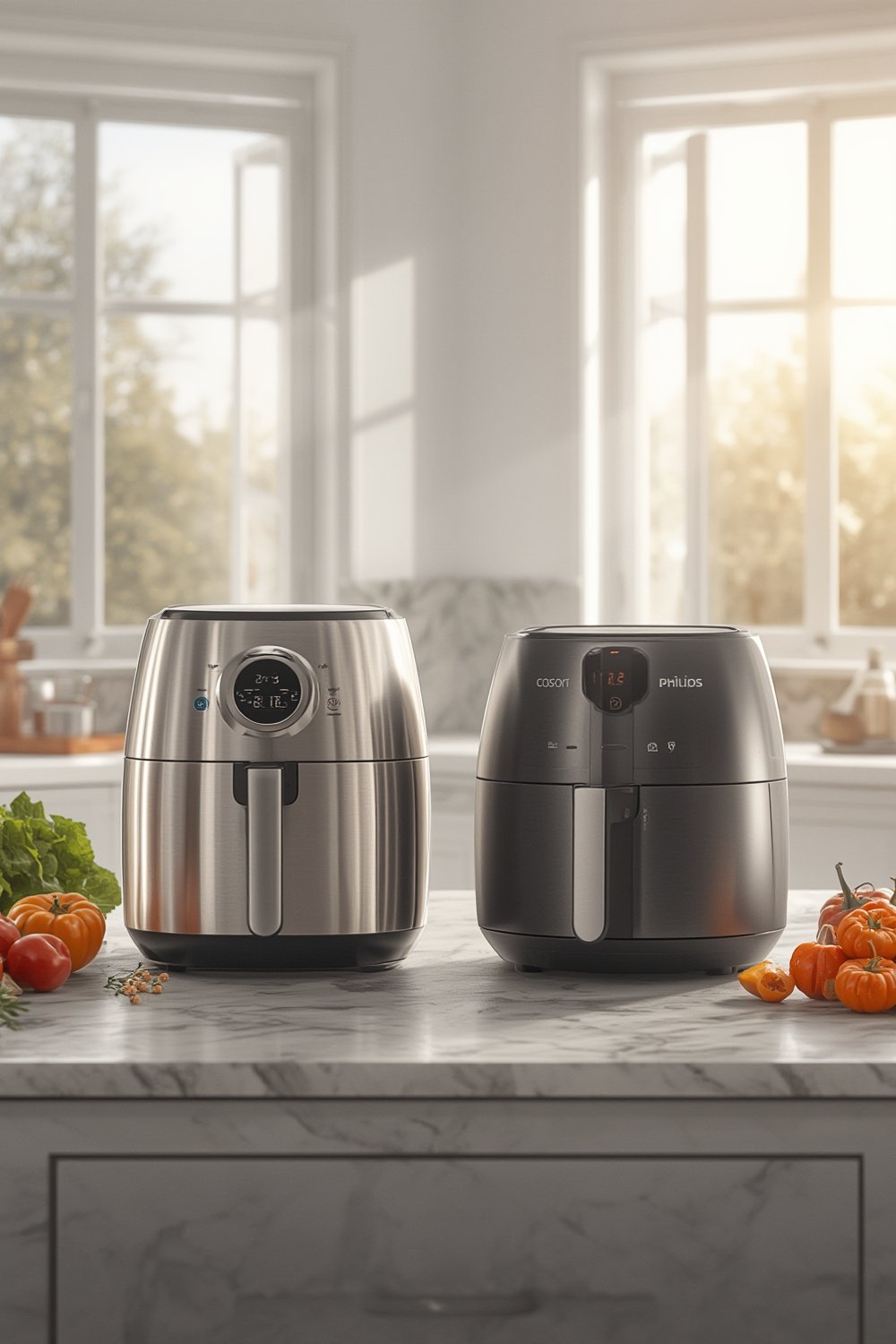
The air fryer market ballooned to USD 1.07 billion in 2024 and is forecasted to grow at ~6.8% CAGR moving forward (Market Data Forecast). North America accounts for ~35% of global share, driven by health-conscious households and appliance upgrades.
Philips controls the largest piece of the pie (15%), with a reputation built across years of consistent, global distribution. Cosori, meanwhile, has maximized online sales and modular product lines, particularly in the US, where budget-minded small families and tech adopters gravitate toward easy Amazon purchases. The top 5 brands dominate 70% of total sales.
Here’s another example of a popular multi-use air fryer that illustrates the intense competition in this growing market.
What we know (and don’t) about 2026 models — specs and smart features
The most recent product data highlights Philips’ 3000 Series Dual Basket (Rapid Air Technology, dual timing), Cosori’s Dual Blaze (double heating elements, 12 functions, 6.8-quart), and Cosori Pro II Smart (Wi-Fi and VeSync connectivity). However, no validated 2026 model specifications—like wattage or exact capacity—are available yet from trusted sources.
Buyers must approach glossy “new for 2026” tags with caution. Always seek explicit wattage, basket configuration, and documented features in official spec sheets before trusting product-page blurbs. Cosori claims standout smart features and modularity, while Philips focuses on trusted performance—both brands market innovation, but third-party confirmation remains missing.
If you’re interested in 8-quart family-size options for even more room, the Chefman TurboFry Touch XL gives another comparison point.
Side-by-side feature comparison (what to look at)
If you’re weighing Philips vs Cosori air fryer, direct spec-by-spec comparison is tricky since verified 2026 feature details are scarce. Still, you should evaluate:
- Capacity: Will the basket(s) fit the meals you actually cook? Cosori’s Dual Blaze is confirmed at 6.8 qt; Philips’ dual basket size not specified.
- Wattage: Not listed for recent models; essential for matching your kitchen’s circuit and desired cooking speed.
- Heating design: Philips uses Rapid Air for evenness, Cosori touts double heating elements for better consistency.
- Preset programs: Both brands promote a variety, but Cosori is more aggressive marketing app-based customization.
- App integration & voice control: Cosori (Pro II Smart) leads here with VeSync; Philips has no confirmed Wi-Fi or app features as of the latest data.
- Accessories: Racks, inserts, pans—Cosori leans into modular/expandable kits; Philips maintains a more basic accessory set. Always confirm fit/compatibility.
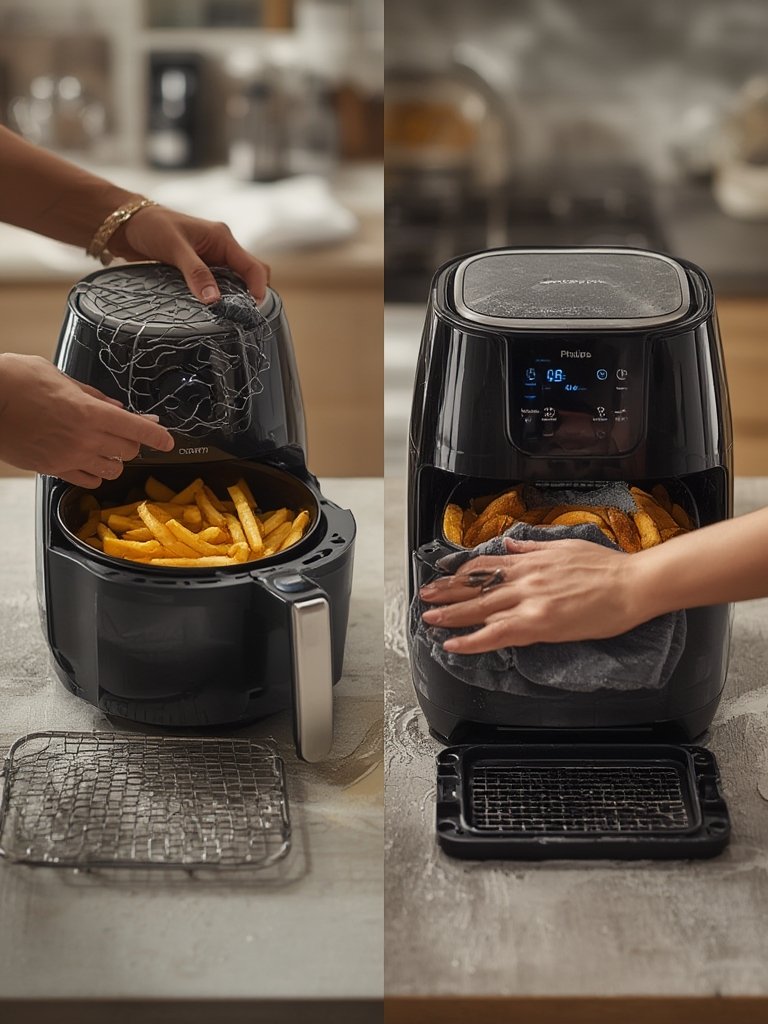
- Cleaning design: Check if baskets go in the dishwasher and how many parts require hand-washing.
| Feature | Philips (3000 Series Dual Basket) | Cosori (Dual Blaze/Pro II Smart) |
|---|---|---|
| Capacity | Unspecified | 6.8 qt |
| Key Tech | Rapid Air, dual basket timing | Double elements, VeSync app, 12 functions |
| Wattage | Not specified | Not specified |
| Top Smart Feature | Not specified | Wi-Fi/app |
Use this rubric to evaluate other leading models, like the Ninja 10QT DoubleStack, for basket and tech comparisons.
Price and long-term value — what the data shows and where gaps remain
No validated 2026 price ranges are published for either brand. Cosori models regularly retail under $100 on Amazon (with the flagship product moving 20,000 units monthly), making it a reliable pick for value-focused buyers. Philips is positioned as a higher-priced, innovation-centric brand—exact street pricing fluctuates based on model and bundle.
For big-ticket kitchen investments, factor in:
- Initial cost (seek historic discount trends using price-tracking tools)
- Expected lifespan, based on brand reputation (hard data lacking for both brands—ask for return and warranty details in writing)
- Accessory cost and availability, especially for replacement baskets or multi-cook kits
- Frequency and depth of sales on authorized platforms
If affordability is top priority, also consider alternatives like the Instant Pot Vortex 6QT XL, which is often discounted and offers fast crisping performance.
Without concrete data, rely on verified recent reviewer feedback for cues on what to expect.
Real-world complaints — durability, cleaning, and cooking performance
Our research surfaced no specific, brand-level complaints about Philips or Cosori air fryers relating to durability, cleaning, or actual cooking output (Credence Research). Most issues reported online tend to affect the broader air fryer category, not a particular brand or model:
- Limited cooking capacity for truly family-sized meals
- Occasional preference among users for traditional ovens or deep fryers
- Unclear instructions or missing dishwasher-safe baskets in lower-cost models
To ensure reliability, scan trusted third-party reviews (not just sponsored ones), real-user photos, and consumer protection complaint logs before purchase.
How Philips and Cosori perform in independent cooking tests (what the evidence says)
No independent, standardized 2026 cooking test data was found in our dataset—for metrics like cooking speed, crispiness, or evenness. Manufacturer claims abound (Philips advertises “crisp, tender, evenly cooked” results via Rapid Air; Cosori boasts “greater evenness” using double heating elements), but these statements remain unproven by labs or major review outlets.
Your best bet: Look for trusted, transparent reviewers or institutions (e.g., Consumer Reports, Wirecutter) who share complete air fryer test results—including pictures and temperature logs. If seeking peer performance or professional insight, check culinary forums and pro chef opinion pieces for hands-on details.
Warranty, returns, and customer support — buyer risk factors
No recent, brand-specific data exists around warranty claims, returns, or support experiences for Philips or Cosori models. Both brands market basic buyer protection and service consistency, but fine-print details shift regionally and model-by-model.
Before you buy, always:
— Confirm warranty length and terms directly with the retailer, not just the manufacturer.
— Ask if authorized repair/service centers are local and what replacement part turnaround times look like.
— Review the return window and who covers shipping on defective units.
— Seek out publicly shared buyer support reviews on major e-commerce platforms.
Accessory ecosystem and compatibility — small things that affect daily use
Accessories impact daily cooking far more than many shoppers expect. Cosori highlights modular racks and companion app support, and Philips offers basic accessories. However, reliable third-party compatibility details (especially if mixing parts across brands or shopping generics) are not documented in major research or comparison guides.
What to do? Use official brand accessory lists and always check fit measurements. Don’t assume a “universal” product actually fits your exact model basket—close is not always good enough for air flow or safety. Accessory modularity also improves long-term value, especially as new recipe trends emerge.
Undercovered investigative angles — what competitors missed
Most Philips vs Cosori air fryer comparison content skips deeper, buyer-relevant questions, such as:
- energy efficiency over time: How much will each brand/model increase your electricity bill with daily use?
- Warranty claim rates: Are users typically satisfied with repair speed and replacement eligibility?
- Long-term durability: What’s the actual lifespan in intensive, busy households?
- Accessory cross-compatibility: Can you mix brands or buy after-market upgrades?
- Real-world running cost: Do filter costs or basket replacements add up?
Our research found zero quantitative data on these points for Philips or Cosori. Savvy buyers should prioritize direct sources, such as utility calculators, manufacturer warranty fine print, or real owner testimonials, before a final decision.

Methodology — how we checked sources and where readers can verify
This guide synthesized data from leading market research (including Credence Research), manufacturer product pages, Amazon sales rankings, and third-party reviewer commentary. Limitations include:
- No available 2026 model spec sheets or verified independent lab test results
- Lack of brand-level warranty, return, or long-term durability data
- Scant quantitative accessory compatibility, energy use, or cost analysis
Readers should double-check all claims directly on manufacturer websites, consult reviewer videos and in-depth product trials, and reference consumer protection complaint registries for the latest user-experience signals.
If you’re evaluating appliances, our comparison content on the Ninja BN701 Professional Plus Blender illustrates this same research-driven approach.
Final buying checklist — what to confirm before you hit buy
- Family size vs stated basket capacity (minimum 5-6 qt for 3-4 people)
- Wattage—ensure your kitchen circuit supports it
- Basket and pan cleaning—are they dishwasher-safe?
- Independent reviewer test results (video and photo evidence preferred)
- Warranty terms and local service availability
- Accessory and spare-part availability (from both brand and third-party)
- Historic price/discount patterns for your chosen model
Put simply: if you want affordable, feature-rich, and easy-to-buy, Cosori leads on price and smart tech. For those who value market leadership and innovation, Philips is the trusted name—though both brands would benefit from clearer long-term and service data. When asking “Philips vs cosori air fryer: which should you buy?” check off this list and don’t skip independent validation before purchasing.
FAQ
Which is better for a small family: Philips or Cosori air fryer?
Cosori typically offers larger-capacity models at lower prices and strong smart features, making it ideal for small families who want value and app control. Philips has a reputation for build quality but specifics for 2026 models are not confirmed. Always check basket size and user reviews before buying.
Are Cosori air fryers easier to clean than Philips?
Cleaning mechanisms vary by model, but both Philips and Cosori offer removable baskets and parts in recent lines. Confirm if baskets are truly dishwasher-safe in the current spec sheet, as this isn’t always clear in product listings.
What smart features does Cosori offer that Philips does not?
As of the latest data, Cosori offers VeSync app integration, remote monitoring, and voice control with its Pro II Smart models, while Philips has not published comparable smart features for its air fryers.
What about warranty and service on Philips or Cosori air fryers?
No current, brand-specific warranty experience reports are available. Always verify the official warranty length, return policy, and local service options for your model before purchase.
Where can I compare air fryer features and prices?
Besides manufacturer sites, use up-to-date product review guides, consult trusted technology reviewers, and compare Amazon best-seller listings. Price-tracking tools and consumer-protection complaint logs can also help surface hidden issues or discounts.